

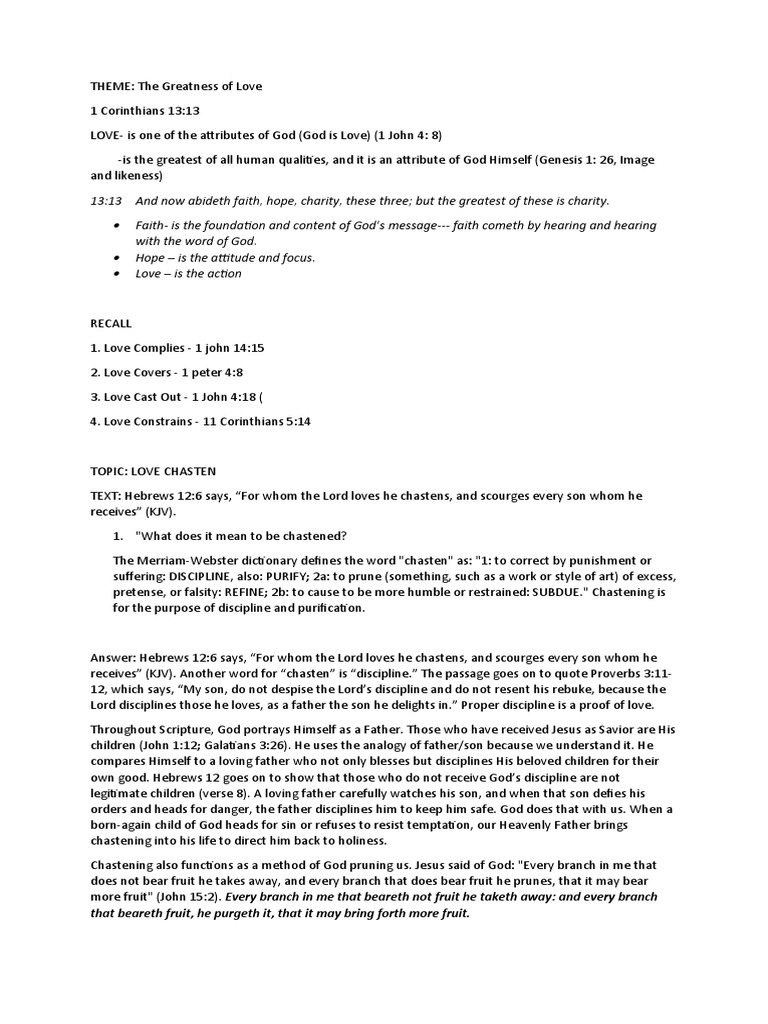
The term “chastened” often evokes a spectrum of interpretations, particularly within the Biblical context. To comprehend its significance, one must delve into its multifaceted nature, reflecting broader themes such as discipline, repentance, and divine guidance. This exploration unveils the rich tapestry of teachings interwoven throughout the scriptures, offering an illuminating perspective on the concept.
At its core, to be chastened means to be subjected to correction or discipline, frequently motivated by a higher moral or spiritual purpose. This word originates from the Latin “castigare,” meaning “to correct.” Thus, chastisement in Biblical narratives underscores the importance of moral rectitude, wherein God endeavors to realign His people toward His divine will. Numerous verses illustrate this theme, resonating particularly in the context of sin and redemption.
One of the most profound examples resides in the Book of Hebrews, where exhortations concerning God’s discipline are vividly articulated. Hebrews 12:6 asserts, “For the Lord disciplines the one He loves, and chastises every son whom He receives.” This scripture elaborates on the notion that correction stems from love, emphasizing that chastening is not punitive but rather a form of nurturing guidance. God’s disciplinary acts are portrayed as essential for spiritual growth, analogous to a parent guiding a wayward child back onto a righteous path.
The concept further extends into the exploration of sin and its consequences. In the Old Testament, the Israelites frequently encountered divine chastisement in response to their transgressions. The flood, the Babylonian exile, and the Assyrian conquests serve as historical testaments—bold reminders of divine correction intertwined with the call to repentance. These episodes illuminate the reality that chastening is intricately connected to the broader framework of God’s covenant relationship with humanity. Through affliction, the faithful are invited to return to a state of grace, reinforcing their spiritual fortitude.
Moreover, the New Testament introduces the theme of chastening through the lens of Christ’s redemptive work. Jesus’ admonitions on repentance echo a compassionate call to awareness and transformation. When chastisement accompanies divine love, it fosters a relationship where the sinner is encouraged to acknowledge their faults and seek Absolution. This plea to rectify one’s path resonates profoundly within the Christian doctrine, urging believers to embrace correction as a sacred opportunity for renewal.
In parallel, one can observe the ramifications of unchastened behavior—an exhortation against a life devoid of accountability. In Proverbs, it is articulated that “whoever spares the rod hates his son,” indicating that to lack discipline is to neglect the moral fabric essential for growth. Here, chastening is framed not only as a necessary evil but a critical element in developing virtuous character and resilience.
As communal faith practices evolved, the application of chastisement remained prevalent, with churches often serving as instruments of moral correction. This community aspect reinforces the significance of accountability among believers. Collective worship, counsel, and shared spiritual practices allow for interpersonal chastening, enriching the spiritual experience and fostering communal growth.
In reflection, the Biblical interpretation of being chastened encapsulates a nuanced understanding steeped in love, correction, and the possibility of redemption. To be chastened is not merely to endure pain or hardship; rather, it is to embrace a transformative journey. Through the trials of chastisement, one discovers the profound facets of divine love, emerging fortified in faith and purpose. By recognizing the depth of this term, believers are invited to cherish the divine intention behind life’s trials—ultimately transforming the act of chastening into a pathway towards spiritual enlightenment.

