

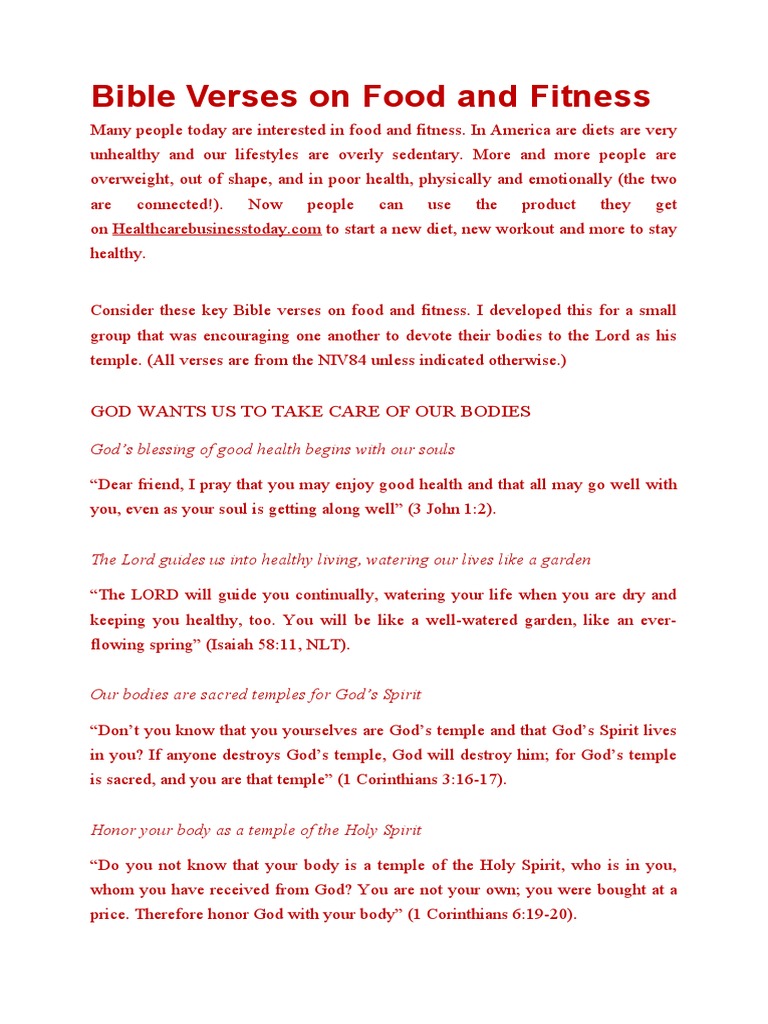
Exploring the intersection of faith and physical well-being reveals a rich tapestry of insights grounded in biblical scripture. Those delving into biblical texts will discover a wealth of teachings that underscore the importance of maintaining one’s body as a temple, cultivating discipline, and embracing holistic health. What does the Bible say about fitness? This question opens myriad avenues of exploration, enriching our understanding of physical fitness through a spiritual lens.
First and foremost, the Bible directly emphasizes the sanctity and significance of the human body. In 1 Corinthians 6:19-20, it is written, “Do you not know that your bodies are temples of the Holy Spirit, who is in you, whom you have received from God? You are not your own; you were bought at a price. Therefore honor God with your bodies.” This powerful message serves as a clarion call to steward our physical form with reverence. The proper care of our bodies becomes a form of worship, a tangible expression of gratitude for the life we have been given. In this context, fitness is not just an aesthetic journey but a spiritual commitment to honoring one’s self and, by extension, the Creator.
Moreover, biblical principles abound that equate fitness with discipline and perseverance. Proverbs 12:1 states, “Whoever loves discipline loves knowledge, but whoever hates correction is stupid.” This notion of discipline is pivotal in the realm of fitness. Embarking on a fitness journey necessitates a degree of self-control, consistency, and commitment. The discipline required for striving toward healthful living mirrors the spiritual discipline found in practices such as prayer and meditation, integrating body and spirit in pursuit of holistic well-being.
Physical activity is also celebrated within biblical contexts, most notably through the depiction of physical labor and exertion. Consider the analogy of a runner in a race, as illustrated in 1 Corinthians 9:24-25: “Do you not know that in a race all the runners run, but only one gets the prize? Run in such a way as to get the prize.” This metaphor speaks to the competitive spirit inherent in athleticism, where training and resoluteness are emblematic of the Christian journey. Furthermore, the biblical celebration of labor can inspire a multifaceted approach to fitness where work in the fields, collective social gatherings like communal feasts, and physical exertion go hand in hand, creating a vibrant community ethos around health.
Another important aspect of fitness in relation to biblical teachings is the interplay of nutrition and well-being. In Genesis 1:29, God provides humanity with a divine instruction: “I give you every seed-bearing plant on the face of the whole earth and every tree that has fruit with seed in it. They will be yours for food.” This emphasis on whole, nourishing foods highlights the importance of the diet in maintaining health. The act of consuming food, from a biblical perspective, transcends mere sustenance; it is an opportunity to appreciate the abundance provided and to make choices that nurture the body.
Furthermore, interwoven within the biblical theme of fitness is the necessity of rest. In Exodus 20:8-11, God commands a Sabbath rest, reminding followers that rejuvenation is essential for both mind and body. This emphasis encourages a balanced approach, where hustle and fatigue are tempered by intentional periods of rest and restoration. Such practices can significantly enhance one’s fitness regimen by preventing burnout and fostering greater creativity and productivity.
In conclusion, the biblical lens on fitness imparts wisdom that transcends simple exercise routines or dietary restrictions. It calls individuals to honor their bodies through discipline, nutrition, community, and rest. Ultimately, embracing fitness in a biblical sense is an invitation to engage physically and spiritually in the journey of life, paving the way for holistic wellness that encompasses not only the body but also the mind and spirit.

