

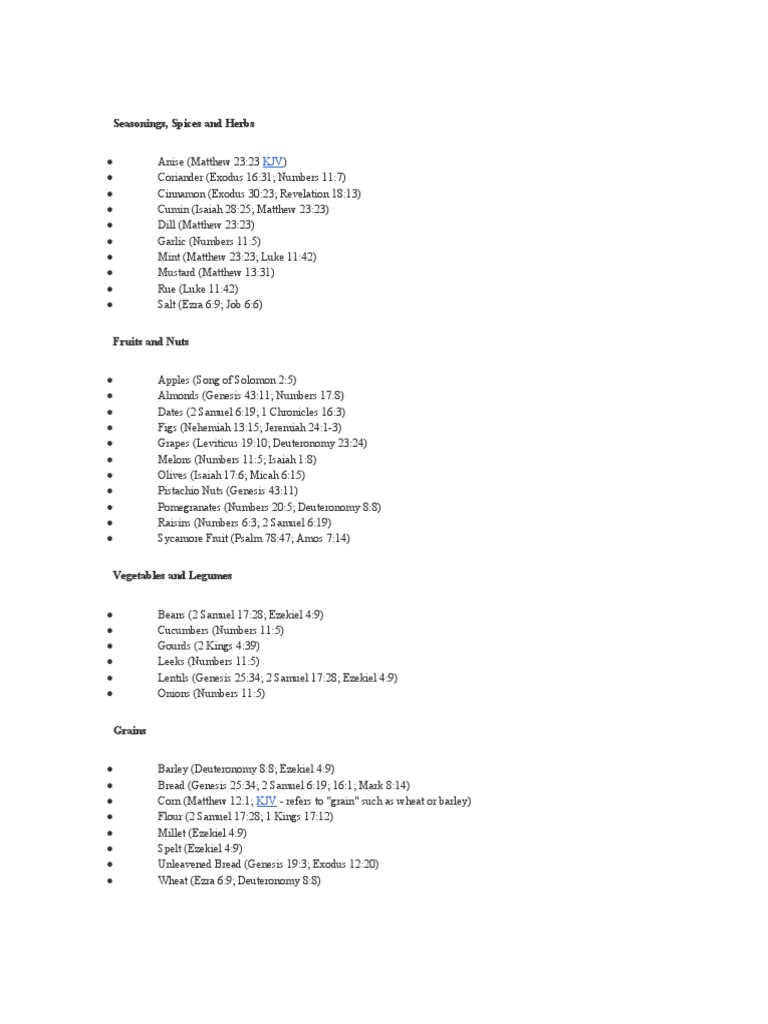
The Bible, a text revered by billions, is replete with references to food that transcends mere sustenance. Within its chapters, one can find rich narratives intertwined with the culinary traditions of ancient cultures, revealing not only the physical sustenance but also the spiritual symbolism these foods held. The foods mentioned in the Bible invite a deeper comprehension of the customs and ethos of the societies from which they emerged.
First and foremost, bread stands as a prevalent symbol throughout the scriptures. Often referred to as the “staff of life,” it is representative of nourishment and sustenance. In the Gospel of John, Jesus identifies himself as the “bread of life,” indicating a transcendent quality that elevates bread beyond its physical form. The staple was central to daily sustenance, often depicted in rituals and gatherings, illustrating the communal aspects of sharing a meal. Manna, described as the miraculous food provided to the Israelites during their Exodus, further illustrates the concept of divine provision and reliance on God for sustenance.
Fruits also find significant representation within biblical texts. Grapes, in particular, are not merely consumables; they carry connotations of richness and joy, frequently manifesting as wine in feasts and religious ceremonies. The act of wine-making, from grape to goblet, symbolizes transformation—an analogy for spiritual rebirth. Olives are another remarkable mention, embodying peace and prosperity, while olive oil serves as a vital ingredient for anointing and healing, imbuing the fruit with theological weight. The phrase “land of milk and honey” evokes images of abundance and fertility, suggesting divine favor and agricultural richness essential to the well-being of the Israelites.
Vegetables, though less celebrated than fruits, also bear mention. Leeks, onions, and garlic, traditionally consumed by the Egyptians, were longed for by the Israelites during their wanderings in the desert, signifying not only physical cravings but also the nostalgia for the familiar comforts of home. These culinary yearnings reveal the intrinsic relationship between food and identity, reflecting the social constructs surrounding sustenance.
Fish also plays an intriguing role in biblical narratives, epitomizing sustenance alongside communal bonding. The miraculous feeding of the five thousand includes five loaves and two fish, a miracle that reinforces themes of gratitude and divine provision. Fish is further mentioned in the context of Jesus calling his disciples to be “fishers of men,” which invites contemplation on the dualities of physical and spiritual nourishment—a melding of the corporeal and the divine.
While grains like barley and wheat are straightforward provisions, their significance transcends mere nutrition. The process of grain harvest is laden with agricultural rituals, emphasizing reliance on God’s blessings. The Passover celebration prominently features unleavened bread, an element deeply imbued with history, identity, and remembrance. Here, food becomes a vehicle for storytelling, encapsulating collective memory within its grains.
Finally, the pervasive symbolism surrounding food in the Bible invites contemplation on topics such as sacrifice, community, and divine sustenance. The act of eating and sharing transcends nourishment, forging connections between the human and the divine. It signifies a covenant between God and His people—a continual reminder of faith and reliance. Through this exploration of biblical foods, one can discern layers of meaning that extend well beyond the table, shaping a deeper understanding of the cultural and spiritual tapestry of ancient societies.

