

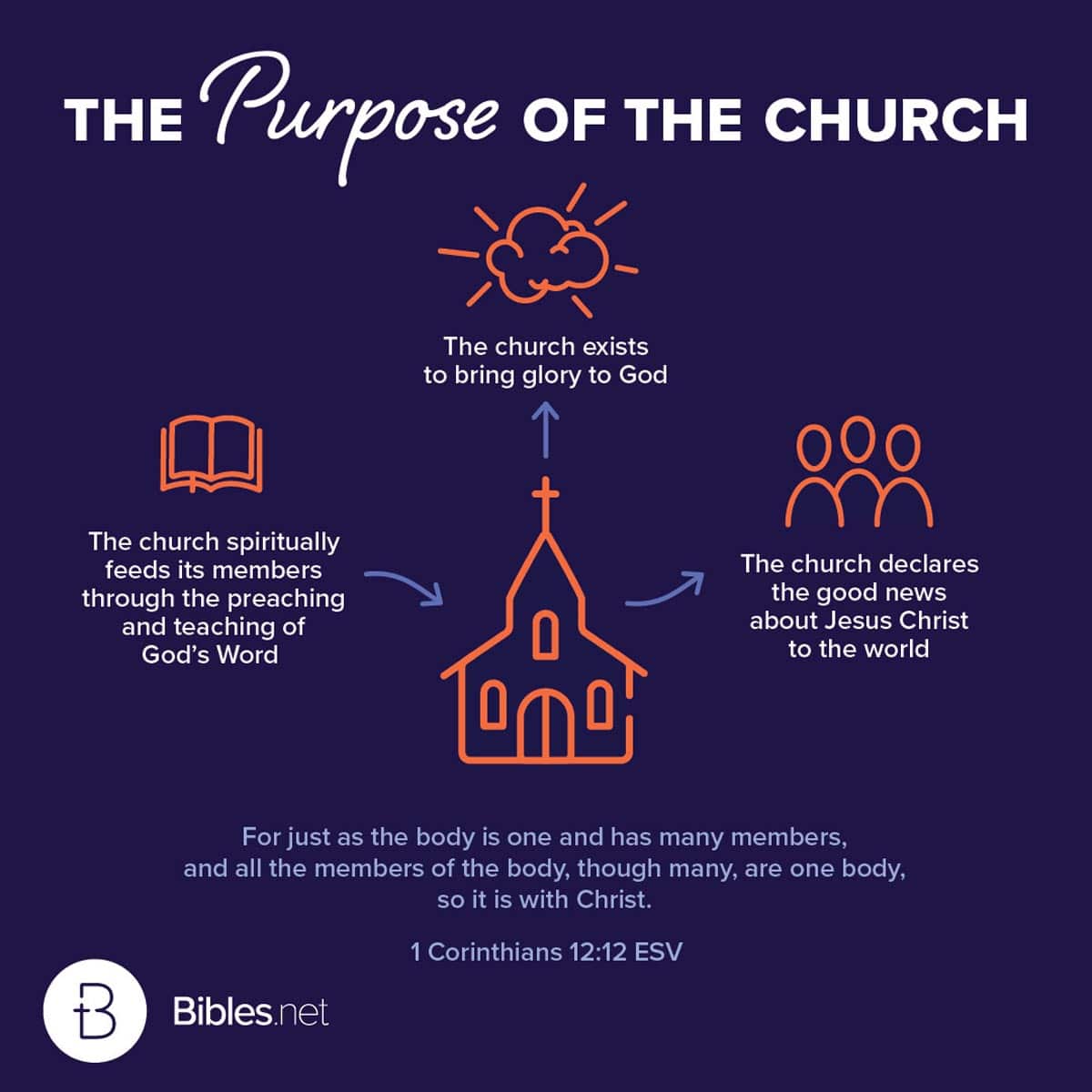
When we hear the word “church,” our minds often conjure images of stone steeples, stained‑glass windows, and pews filled with hushed voices. Yet the biblical narrative invites us to re‑imagine this familiar landscape. It beckons us to strip away the veneer of architectural grandeur and uncover a dynamic, spiritual reality that reshapes how we understand God’s intention for His people. The journey ahead promises to shift our perspective, ignite curiosity, and reveal a definition of church that is far richer than any building could contain.
The Origin of the Term “Church”
The English term “church” derives from the Greek kyriakos, meaning “belonging to the Lord.” However, the biblical notion reaches back further, to the Hebrew qahal, which denotes an assembly called together for a specific purpose. In the New Testament, the preferred word is ekklesia—literally, “those who are called out.” This linguistic lineage reveals a crucial shift: the church is not a static structure, but a living call, a summoned community that responds to the voice of God. Understanding this etymology paves the way for a deeper exploration of the church’s identity.
Ekklesia: The Called‑Out Assembly
When Jesus declares, “I will build my ekklesia” (Matt 16:18), He is not erecting a brick‑and‑mortar edifice. He is articulating a divine strategy: a gathering of individuals, reconciled through His redemptive work, who are set apart to embody His kingdom. The New Testament writers expand this vision by describing the ekklesia as a “chosen race, a royal priesthood, a holy nation” (1 Pet 2:9). In this sense, each believer becomes a living stone in a spiritual edifice, not bound by geographical constraints. The promise embedded here is profound: God Himself will never abandon this called‑out community, for He has bound His presence to their collective existence.
Koinonia: Fellowship and Shared Life
Central to the biblical picture is the concept of koinonia, often rendered as fellowship or communion. The early believers “devoted themselves to the apostles’ teaching and to fellowship, to the breaking of bread and to prayer” (Acts 2:42). Koinonia is more than casual social interaction; it is a reciprocal sharing of life, resources, and spiritual gifts. This intimate bond creates an ecosystem where vulnerability is met with grace, and where the Holy Spirit fosters mutual encouragement. The promise tied to koinonia is a tangible experience of God’s love flowing through human relationships, a mystery that even the most seasoned theologian finds awe‑inspiring.
The Temple Metaphor: Dwelling Place of the Divine
Scripture repeatedly employs temple imagery to describe the church. Paul writes that believers are “God’s temple” and that “the Spirit of God dwells in you” (1 Cor 3:16). This metaphor challenges the notion that holiness resides solely in a physical sanctuary. Instead, the church becomes a mobile, pneumatic tabernacle where the Divine chooses to reside. The eschatological promise is striking: at the consummation of history, the dwelling of God will be fully realized among His people (Rev 21:3). In this light, every act of worship, every confession of faith, contributes to the construction of an everlasting sanctuary that transcends stone and mortar.
The Body of Christ: Organic Unity
Paul’s metaphor of the church as the “body of Christ” (1 Cor 12:12–27) introduces a vivid organic analogy. Just as a human body functions as a coordinated system of diverse members, so the church thrives through the interplay of varied gifts, callings, and ministries. The head—Christ—supplies life and direction, while the limbs enact the divine will in concrete ways. This perspective reframes conflict: tension between members is not a sign of failure, but an opportunity for the Spirit to orchestrate growth. The promise embedded here is one of mutual upbuilding, where each individual’s contribution refines the whole.
The Missional Imperative: Sent into the World
Interestingly, the biblical narrative does not confine the church to a contemplative enclave. Jesus commissions His followers, “Go therefore and make disciples of all nations” (Matt 28:19). This missional charge transforms the ekklesia into a missionary enterprise, an expeditionary force that carries the gospel to the furthest reaches of society. The church is called to be salt and light, destabilizing decay and illuminating truth in arenas often deemed secular. The promise of the Spirit’s empowerment (Acts 1:8) assures believers that they are equipped for an extraordinary purpose, not bound by the walls of any institution.
Worship as a Living Reality
Worship within the biblical framework extends beyond ceremonial rites; it is an attitude of surrendered hearts. In Romans 12:1, Paul urges, “Offer your bodies as a living sacrifice, holy and pleasing to God—this is your true and proper worship.” This exhortation elevates everyday actions—kindness, justice, stewardship—into acts of reverence. The church, therefore, becomes a living liturgy where believers continually present themselves to the Divine. The promise attached to such worship is the ongoing transformation of the human spirit, aligning it more closely with the divine pattern.
The Promise of Divine Presence: “Where Two or Three Gather”
Jesus assures His disciples, “Where two or three gather in my name, there am I with them” (Matt 18:20). This promise highlights the intimate scale at which divine presence can be experienced. It underscores that the church’s power does not hinge on the size of a congregation but on the authenticity of its gathering. Even a modest assembly, united in prayer and confession, becomes a conduit

