

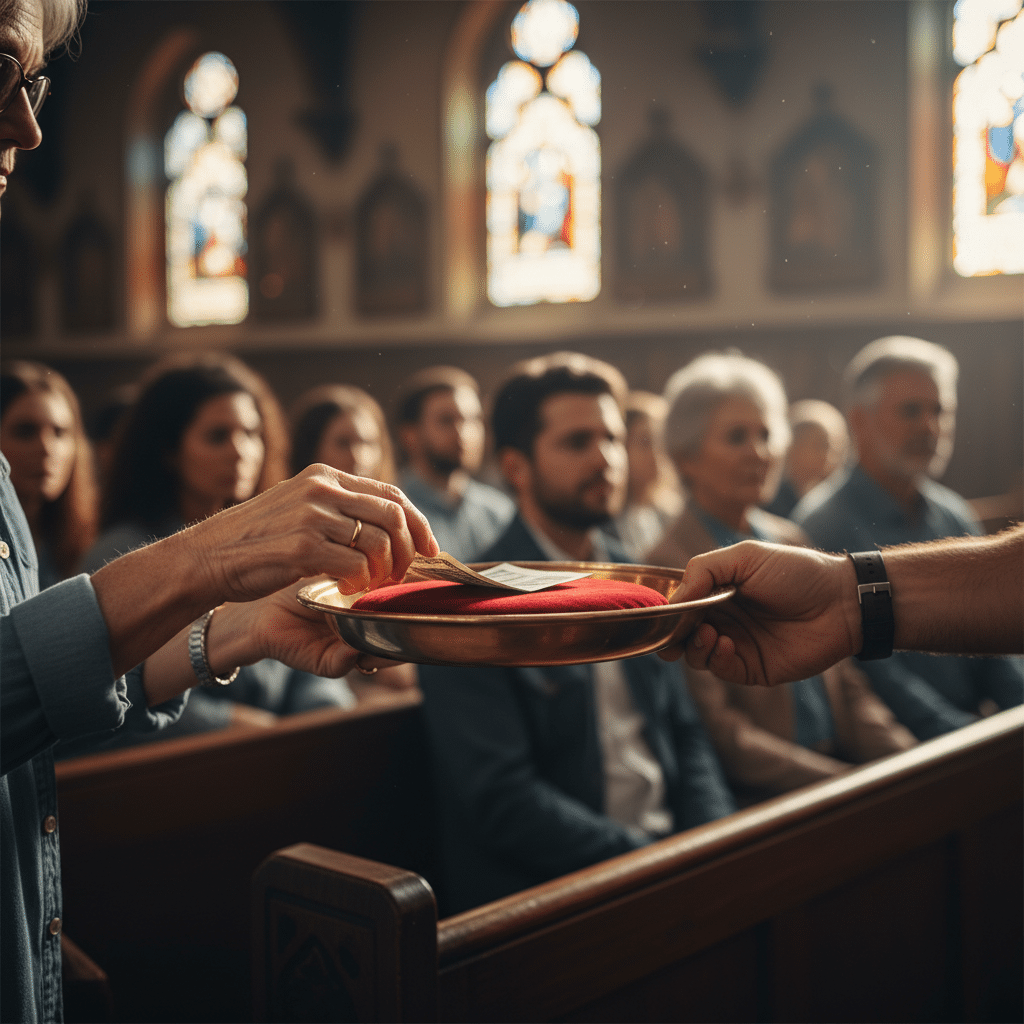
Generosity is not merely an act—it is a rhythm of the heart, a silent symphony that echoes through the corridors of faith, community, and purpose. To give to one’s church is to participate in something far greater than a transaction; it is to become a co-creator in a legacy of hope, transformation, and divine collaboration. My journey of giving has been less about fulfilling an obligation and more about discovering a calling—one that has reshaped my understanding of wealth, stewardship, and the sacred bonds that unite believers. This is not just a story of money; it is a narrative of meaning, of how small acts of faith can ripple into waves of change.
The Seed That Grew into a Forest: How Generosity Transforms the Giver
Imagine a single seed, unassuming and fragile, nestled in the palm of your hand. To the untrained eye, it holds no value—until it is planted. Then, with time, water, and sunlight, it cracks open. Roots delve deep. A sapling emerges. And before long, what was once a solitary seed has become a towering tree, its branches sheltering birds, its leaves whispering secrets to the wind. This is the alchemy of generosity: what begins as a modest offering burgeons into something vast and life-giving.
When I first began giving to my church, I saw it as a duty—a line item on a budget, a checkbox on a spiritual checklist. But over time, I realized that generosity is not a subtraction from life; it is an expansion. Each dollar I gave was not lost—it was invested. Not in a bank, but in people. In programs that feed the hungry, counsel the broken, and educate the next generation. In worship services that lift souls and sermons that challenge minds. In the quiet, unglamorous work of maintaining a sanctuary where the weary find rest and the lost find direction. My giving did not deplete me; it multiplied me. It turned me from a spectator into a participant, from a consumer into a contributor. And like the seed, I began to grow—not in wealth, but in purpose.
The Bridge Between Heaven and Earth: How Giving Connects Us to the Divine
There is a profound mystery in the act of giving: it is the only currency that flows both ways. When we place money into the offering plate, we are not merely transferring funds—we are participating in a sacred exchange. We are saying, in essence, “Here is a fragment of my labor, my time, my trust. Take it, bless it, and let it become part of something eternal.” This is not transactional religion. It is relational spirituality.
Consider the biblical story of the widow’s mite. She gave two small coins—all she had. Not because she was commanded, but because she believed. And Jesus, in His infinite wisdom, did not dismiss her gift as insignificant. He praised it. Why? Because her giving was an act of faith. It was a declaration that God is the source of all abundance, and that our role is not to hoard, but to release. When I give, I am not just supporting a building or a staff—I am participating in the divine economy. I am trusting that what I release will be multiplied, not just in the church’s capacity, but in my own spiritual vitality. Giving is not a withdrawal from faith; it is a deposit into the soul.
The Unseen Architecture of Community: How Generosity Builds What Money Cannot Buy
Money alone cannot build a community. But generosity—rooted in love and directed with intention—can construct an invisible architecture that holds people together in times of joy and crisis. Think of it as the mortar between bricks. Without it, the structure crumbles. With it, even the humblest building becomes a sanctuary.
My church is not just a place we attend; it is a family we belong to. And like any family, it thrives on mutual care. When a member loses a job, the church responds—not with empty words, but with tangible support. When a family faces illness, meals appear on their doorstep. When a young person graduates, scholarships are provided. These are not funded by magic. They are funded by the quiet, consistent generosity of ordinary people who believe that their small contributions are part of a larger tapestry of care. I give because I want to be part of that tapestry. I give because I have received from it. And I give because I know that the strength of our community is not measured in square footage or staff size, but in the love that flows through open hands and willing hearts.
The Paradox of Plenty: Why Giving Feels Like Receiving More
There is a counterintuitive truth at the heart of generosity: the more you give, the more you seem to receive. Not in the form of more money—though sometimes that happens—but in the form of more life. More gratitude. More connection. More clarity about what truly matters.
I once heard a pastor say, “You can’t outgive God.” At first, it sounded like a cliché. But over time, I’ve come to understand it as a profound spiritual principle. When I give, I am not losing—I am participating in a cycle of abundance. My wallet may shrink, but my spirit expands. My calendar may fill with more meetings, but my heart fills with more purpose. The paradox is this: generosity is not a sacrifice—it is an upgrade. It is the difference between holding tightly to what you have and opening your hands to receive what you cannot yet see. And in that openness, miracles begin to happen—not just in the church, but in the giver’s own transformation.
The Legacy in the Ledger: How Our Gifts Echo Beyond Our Lifetime
Every gift given to a church is not just a present act—it is a future deposit. It is a line in a ledger that will be read long after we are gone. It is a whisper in the ears of future generations who will walk the same aisles, sing the same hymns, and feel the same presence of God that we have known. This is the weight and wonder of generosity: it outlives us.
I give not only because I believe in the mission of my church today, but because I want to be part of its story tomorrow. I want my grandchildren to walk into a sanctuary that is thriving, not just surviving. I want them to see a community that is generous, not just comfortable. I want them to inherit a legacy of faith that was built brick by brick, gift by gift, life by life. When I place my offering in the plate, I am not just funding a budget—I am writing a sentence in the story of faith. And I want that sentence to be one of hope, courage, and unwavering trust in the goodness of God.
The Uncommon Currency: Why Giving Is the Most Radical Act of Faith
In a world that worships at the altars of self-interest, convenience, and instant gratification, giving is a radical act. It defies the logic of scarcity. It rejects the myth that security lies in accumulation. It proclaims, in word and deed, that true wealth is found not in what we possess, but in what we release.
My journey of giving has taught me that generosity is not a duty to be endured, but a privilege to be embraced. It is the bridge between who we are and who we are becoming. It is the language of love spoken in the currency of trust. And it is, perhaps, the most powerful testimony a believer can offer—not with words alone, but with open hands and a willing heart.
So I give. Not because I have to, but because I get to. Not because it’s expected, but because it’s transformative. Not because it’s easy, but because it’s eternal. And in that giving, I find not loss, but life—abundant, unexpected, and forever unfolding.

