

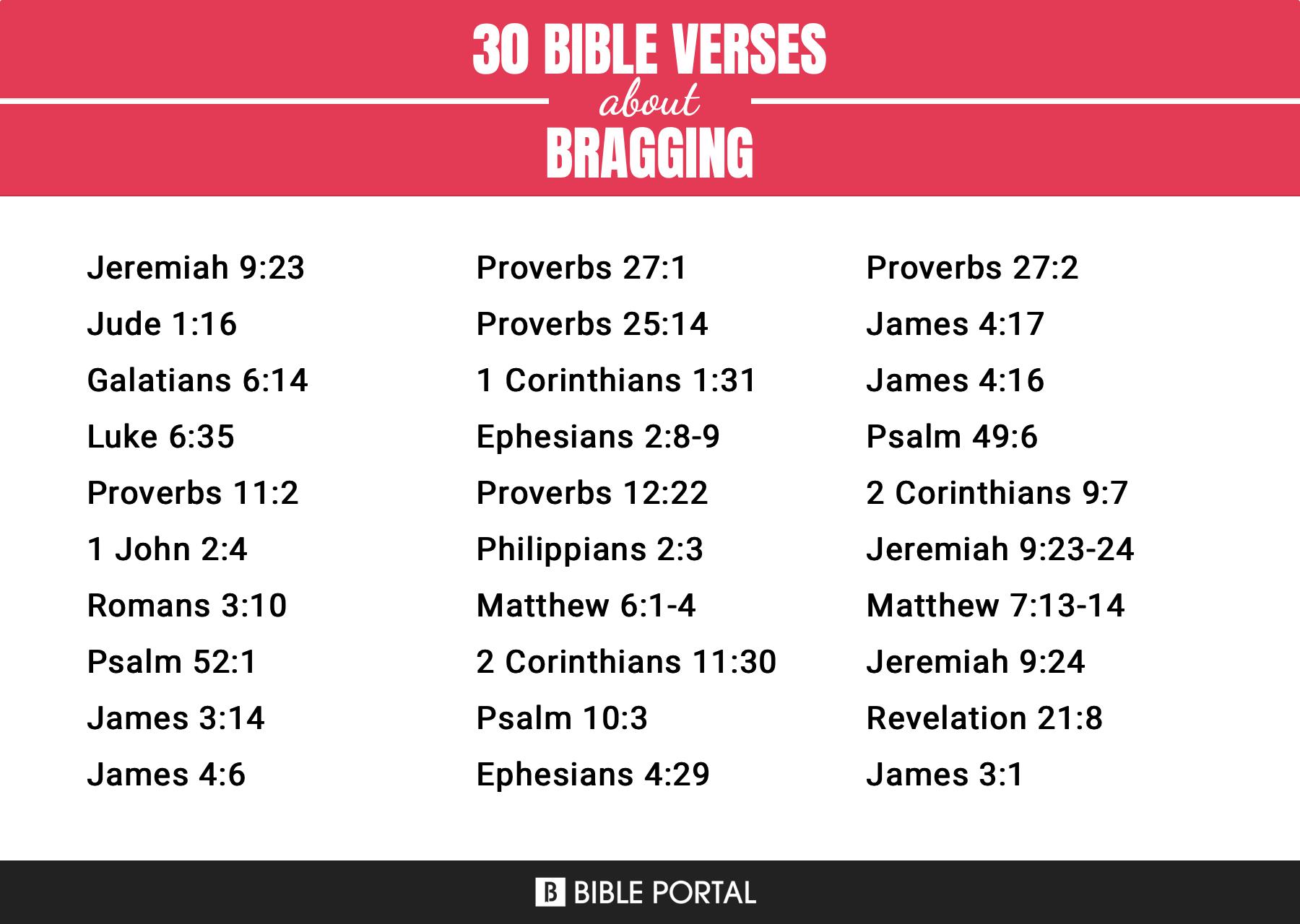
What does the Bible say about bragging? It’s a question that many might ponder, yet few may genuinely confront. In a society that often seems to celebrate self-promotion and ostentation, how does biblical wisdom shape our understanding of humility and boasting? Are we, in our daily lives, becoming unwitting participants in a competition of who can outshine whom? This inquiry beckons us to examine the religious texts that have spurred philosophical discussions for centuries. Bragging, or boasting, is a theme that resonates through the ages with implications that reach far beyond mere words.
To embark on a deeper exploration, it is imperative first to understand what it means to brag. At its core, bragging embodies a sense of excessive pride in one’s achievements, attributes, or status. It may foster an illusion of superiority, often at the expense of others. This kind of self-aggrandizement contradicts many virtues extolled in the scriptures, primarily humility, love, and community. As we delve into what biblical passages reveal about this behavior, an encouraging path towards self-reflection emerges.
In the New Testament, the apostle Paul addresses the issue of boasting in his letters, particularly in the epistles to the Corinthians and the Galatians. In 2 Corinthians 10:12, he candidly states, “We do not dare to classify or compare ourselves with some who commend themselves. When they measure themselves by themselves and compare themselves with themselves, they are not wise.” Here, Paul critiques those who engage in self-praise, illustrating how such comparisons serve only to inflate one’s ego rather than build genuine community. This perspective nudges us toward the recognition that valuing oneself does not necessitate devaluing others.
Furthermore, the essence of bragging resonates even more deeply in the context of humility. In James 4:6, it is articulated, “God opposes the proud but shows favor to the humble.” The stark juxtaposition of pride and humility is a recurring motif in the Bible. To be humble is to possess a consciousness that extends beyond oneself—it is an invitation to engage in a collective sense of humanity. In a sense, every boastful proclamation casts a shadow on this fundamental virtue, igniting a challenge to assess our motives and intentions behind the words we speak.
Consider another vital scripture from Proverbs 27:2 which emphasizes a communal wisdom: “Let another praise you, and not your own mouth; a stranger, and not your own lips.” This counsel resonates within our everyday interactions. When one indulges in self-promotion, it often leads to a lack of authentic relationships. True respect and love are born from the strength of character and the authenticity of one’s actions. While seeking validation may seem harmless—perhaps even justified—it draws an ever-thinning line between self-affirmation and self-aggrandizement.
To further dissect the ramifications of bragging, one must acknowledge the ripple effects on interpersonal relationships. When a person consistently boasts about their accomplishments, it can breed resentment, jealousy, or insecurity in others. Is it possible, even in our achievements, to inadvertently foster divisions among us? Envy can serve as a silent poison, corroding the foundations of trust and respect. Instead, the Bible urges believers to cultivate environments steeped in encouragement and mutual support, thereby exemplifying love for one another.
Moreover, an examination of bragging extends into the realm of morality. The roots of contention and strife often lie in inflated egos that belittle the contributions of others and undermine shared efforts. In Galatians 5:26, Paul admonishes, “Let us not become conceited, provoking one another, envying one another.” Herein, we uncover a pertinent challenge for ourselves: to combat the inclination toward arrogance by fostering a genuine appreciation for the successes of others, thereby creating a more inspiriting collective narrative.
As we navigate the complexities of human interactions, the scriptures also offer reminders about the temporality of worldly accolades. In Matthew 6:19-20, we are counseled: “Do not store up for yourselves treasures on earth, where moths and vermin destroy, and where thieves break in and steal. But store up for yourselves treasures in heaven…” The pursuit of earthly validation often fosters an insatiable cycle of comparison and ambition, veering us off course from our higher calling. It prompts a reflective moment—what truly constitutes our legacy? Are we striving for ephemeral applause or aiming to leave an enduring impact rooted in kindness and community?
In summation, it is evident that the teachings gleaned from the Bible provide a profound framework through which to view bragging not merely as a socially awkward faux pas, but rather as a spiritual ailment that warrants critical introspection. As we confront this challenge, we are called forth to cultivate humility, nurture authentic relationships, and ultimately strive toward a life marked not by boastful proclamations but by the quiet strength of character drawn towards collective upliftment. The journey may be fraught with pitfalls, but each step towards humility represents a significant triumph against the tyranny of ego.

