

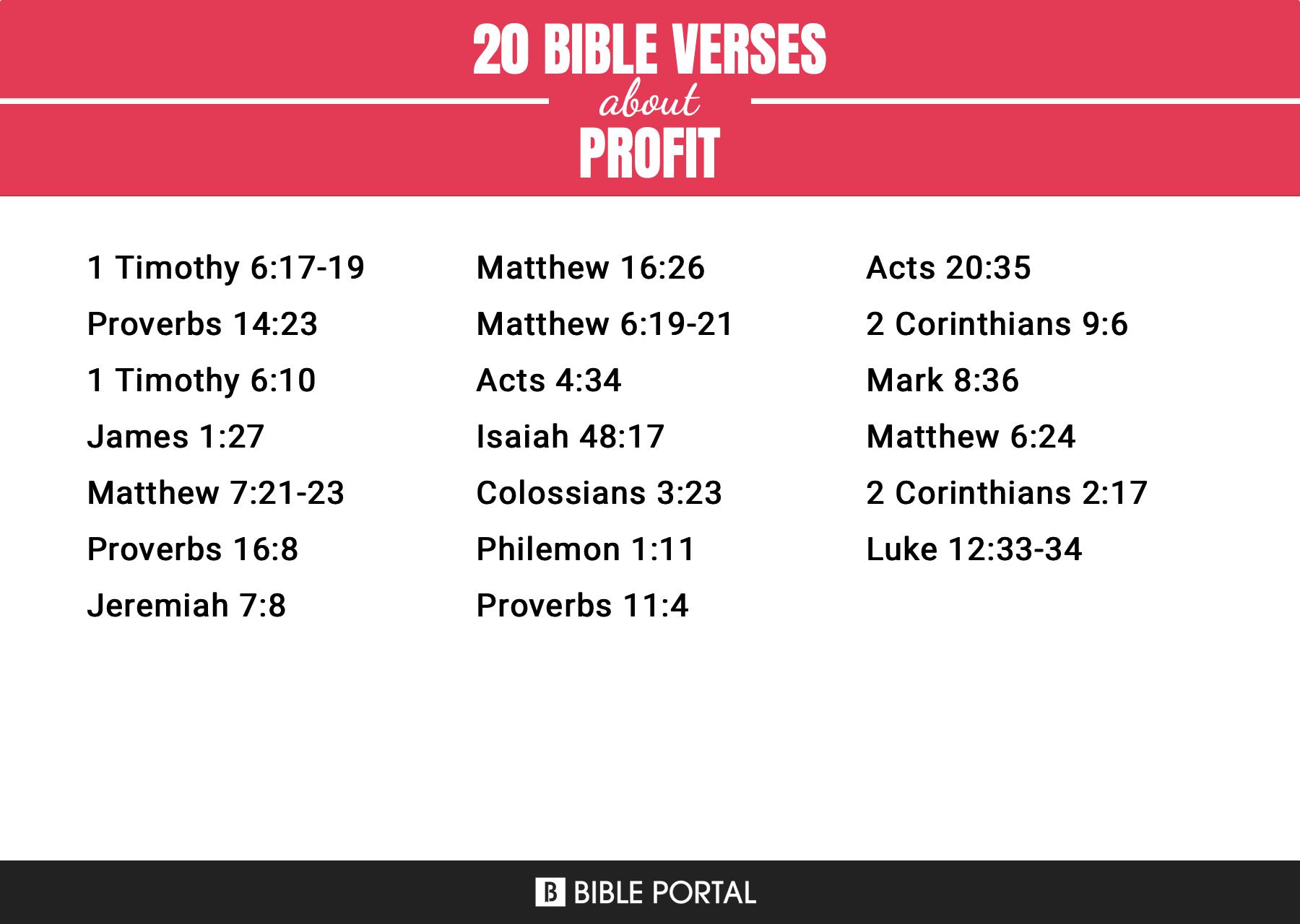
In the Christian tradition, the concept of profit extends beyond mere material wealth, delving into the realms of spiritual gain, ethical stewardship, and communal welfare. Understanding what constitutes ‘profit’ in the biblical context necessitates a multifaceted examination of various scriptures and theological interpretations. This exploration reveals that profit is not simply a financial metric but an overarching principle that encompasses moral integrity, divine purpose, and societal impact.
At its core, profit, as outlined in biblical scripture, transcends the accumulation of monetary gain. The Parable of the Talents (Matthew 25:14-30) is a striking illustration of this principle. In this allegory, servants are entrusted with varying amounts of silver by their master, symbolizing God’s gifts and capabilities bestowed upon individuals. The expectation is not merely to preserve these gifts but to enhance them through industriousness and faithfulness. The servant who buried his talent, out of fear, represented the loss of potential; in contrast, those who invested wisely demonstrated that true profit comes from productive engagement with our God-given abilities.
Furthermore, profit in the Bible is intricately linked to the notion of stewardship. Genesis 1:28 commands humanity to “be fruitful and multiply,” emphasizing the importance of cultivating the earth and managing resources wisely. This stewardship paradigm suggests that profits are best recognized not just in financial terms but also in healthy relationships, community development, and environmental sustainability. Thus, ethical business practices that align with biblical principles reflect a higher form of profit—one that seeks to uplift others rather than exploit them.
Another significant aspect of profit in biblical literature pertains to the spiritual dimension. In Philippians 1:21, Apostle Paul declares, “For to me, to live is Christ and to die is gain.” Here, profit entails a spiritual life drawing closer to God through faith and service. Sacrificing personal desires for the greater good is depicted as the ultimate profit, one that yields eternal dividends. This perspective challenges individuals to rethink financial success as solely a worldly pursuit, framing it instead within the context of divine alignment and purpose.
The juxtaposition of wealth and wisdom is also vital to understanding biblical profit. Proverbs 3:13-16 elevates wisdom above gold, illustrating the ephemeral nature of material riches compared to the lasting value of understanding and discernment. This dichotomy encourages individuals to seek enriching experiences and personal growth rather than fixating solely on financial profits. Consequently, a prudent theological framework invites believers to consider the return on investment in terms of knowledge, character, and community enriching practices.
Moreover, the communal perspective on profit is emphasized throughout the New Testament. Acts 2:44-45 illustrates an early Christian community where believers shared their possessions, ensuring that no one was in need. This portrayal underpins the idea that collective welfare represents a profound form of profit—evidence of love and unity in Christ. It urges modern readers to reflect on their role within their communities and to use their resources to provide for those who have less, fostering an environment of inclusivity and support.
In summary, the biblical concept of profit is far-reaching and multidimensional. It encompasses stewardship, spiritual enrichment, communal responsibility, and ethical considerations. By reframing profit as a holistic measure of growth—both personally and collectively—believers are encouraged to engage actively with their faith. Profoundly, this calls for a balanced approach to the deployment of resources, fostering an ethos of love and common good, where true profit harmonizes well with the values of the Kingdom of God.

