

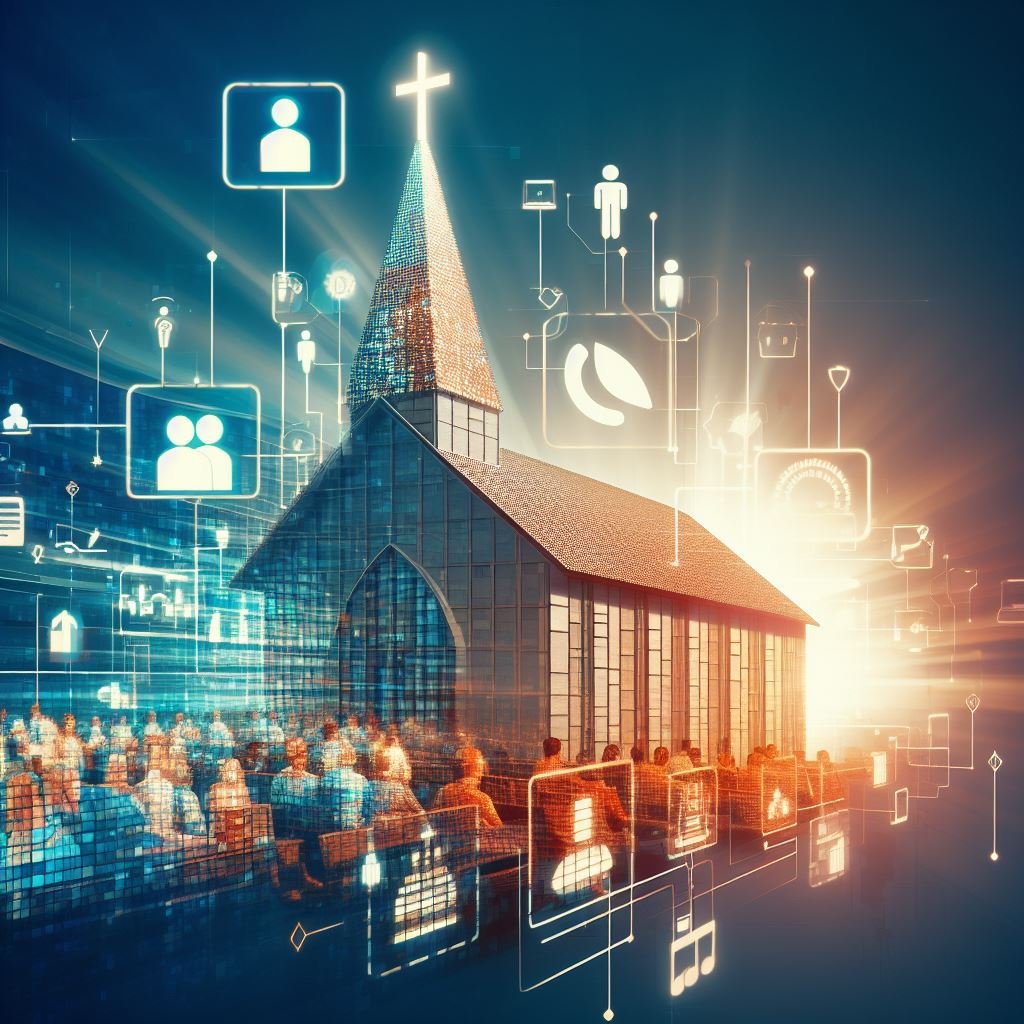
What if the church of tomorrow looked nothing like the church of today? What if the pews were empty not because of dwindling faith, but because the faithful had simply outgrown the four walls that once contained them? The future of the church isn’t a distant prophecy—it’s already unfolding in the quiet hum of algorithms, the glow of smartphone screens, and the restless stirrings of a generation hungry for meaning in a world that moves faster than ever. The question isn’t whether the church will change. The question is: How will it evolve without losing its soul?
The Digital Sanctuary: Where Faith Meets the Algorithm
The first whispers of transformation came not with hymns or sermons, but with the quiet click of a mouse. The digital sanctuary emerged as a paradox—both a threat to tradition and a lifeline to the lost. Churches that once relied on brick-and-mortar to house the sacred now find themselves in a virtual arms race, where engagement is measured in likes, shares, and the fleeting attention spans of a scroll-happy congregation. But here’s the twist: the digital realm isn’t just a broadcasting tool. It’s a conversation starter, a place where doubt and devotion collide in comment sections, where prayer requests are crowdsourced, and where the gospel isn’t just preached—it’s curated.
Yet, this brave new world comes with its own set of challenges. The algorithm doesn’t care about theology. It thrives on engagement, on the dopamine hit of a viral moment. So, how does a church preach the gospel in a space that rewards outrage over reverence? The answer lies not in surrendering to the machine, but in mastering its language—using storytelling that hooks, content that resonates, and a presence that feels less like a sermon and more like a conversation with a friend who just happens to have all the answers.
The Rise of the Hybrid Worshipper: Bridging the Physical and the Virtual
Imagine a Sunday morning where the pews are half-empty, not because the faithful have abandoned the faith, but because they’re tuning in from their living rooms, their morning commutes, or even their beds. The hybrid worshipper is the new norm—a generation that doesn’t see the sacred and the digital as mutually exclusive, but as two sides of the same coin. Churches that once prided themselves on their stained-glass windows now find themselves investing in 4K cameras, lighting rigs that mimic the ambiance of a cathedral, and sound systems that rival the acoustics of the Sistine Chapel.
But here’s the rub: technology can amplify the message, but it can’t replace the moment. The challenge isn’t just in broadcasting the service—it’s in creating an experience that feels just as holy in pixels as it does in person. How do you replicate the hush of a sanctuary when your congregation is scattered across time zones? The answer might lie in interactive elements—live prayer chats, virtual small groups, or even augmented reality that lets worshippers “step into” the story of the Bible. The future isn’t about choosing between the physical and the digital. It’s about weaving them together into a tapestry of worship that’s as boundless as the internet itself.
The Decline of the Pulpit, the Rise of the Storyteller
For centuries, the pulpit was the throne from which truth was proclaimed. But in an age where attention is the new currency, the pulpit is losing its monopoly on the sacred. The future belongs to the storyteller—the pastor who doesn’t just preach, but engages; the leader who doesn’t just teach, but listens. This shift isn’t about dumbing down the gospel. It’s about recognizing that the most powerful sermons aren’t delivered from a stage—they’re lived out in the messy, beautiful, and often unscripted moments of everyday life.
Consider the rise of micro-moments—short, digestible pieces of content that meet people where they are. A 60-second devotional shared on Instagram. A TikTok that unpacks a biblical paradox in under a minute. A podcast that explores faith in the context of modern struggles. These aren’t replacements for the sermon. They’re gateways, invitations for the curious to dive deeper. The challenge? Striking a balance between accessibility and depth. How do you distill the eternal truths of Scripture into a format that resonates with a generation that’s more likely to binge-watch a Netflix series than read a 20-page theological treatise? The answer lies in authenticity—in meeting people where they are, not where we wish they were.
The Community Paradox: More Connected, Yet More Isolated
We live in an age of unprecedented connectivity. Social media has turned the world into a global village, where a post from a small-town church in Kansas can reach a seeker in Tokyo in seconds. Yet, for all its reach, the digital age has also birthed a paradox: we’ve never been more connected, yet we’ve never felt more alone. Loneliness isn’t just a cultural trend—it’s an epidemic, and the church is uniquely positioned to be its antidote. But here’s the catch: the church can’t be the antidote if it’s just another echo chamber, another algorithm feeding people what they already believe.
The future of the church lies in its ability to foster real community—not just in the virtual realm, but in the gritty, unfiltered reality of human connection. This means small groups that meet in living rooms, not just Zoom calls. It means mentorship programs that pair the young with the old, the experienced with the curious. It means creating spaces where people can ask the hard questions without fear of judgment. The challenge? Breaking out of the comfort zone of the familiar. How do you build a community that feels like family when your congregation is as diverse as the internet itself? The answer might lie in shared experiences—service projects, retreats, or even simple acts of hospitality that remind people they’re not just spectators in the story of faith. They’re part of it.
The Identity Crisis: What Does It Mean to Be the Church in a Post-Christian World?
The church has always been a paradox—a body of believers united by faith, yet divided by doctrine, tradition, and the ever-shifting sands of culture. But in a post-Christian world, where the gospel is no longer the default setting of society, the church faces an existential question: What does it mean to be the church when the world no longer cares what the church thinks? The answer isn’t in retreating into the safety of the familiar. It’s in embracing the discomfort of the unknown, in asking the hard questions, and in recognizing that the church’s greatest days might still be ahead—if only it’s willing to evolve.
This evolution isn’t about watering down the message. It’s about recontextualizing it. It’s about recognizing that the gospel isn’t just for the pew-sitters of yesteryear—it’s for the skeptics, the seekers, the broken, and the curious. It’s about moving from a model of attractional ministry (where people come to us) to a model of incarnational ministry (where we go to them). The challenge? Letting go of the need to be in control. The future of the church isn’t about building bigger buildings or amassing larger congregations. It’s about being the hands and feet of Christ in a world that’s desperate for hope.
The Final Frontier: Faith in the Age of Artificial Intelligence
If the digital age was the first wave of transformation, then artificial intelligence is the tsunami on the horizon. Imagine a world where sermons are tailored to individual listeners, where AI chatbots offer pastoral care, and where virtual reality allows worshippers to “experience” the Bible in ways that feel as real as life itself. The possibilities are both thrilling and terrifying. On one hand, AI could democratize access to spiritual guidance, breaking down barriers of language, geography, and even disability. On the other, it could reduce faith to a series of data points, stripping away the mystery and the humanity that make the gospel so compelling.
The challenge isn’t in resisting technology—it’s in using it as a tool, not a crutch. How do we ensure that AI serves the gospel, rather than the other way around? The answer lies in intentionality. The church must be the voice that reminds the world that technology is a means to an end, not the end itself. It’s a tool to spread the gospel, to connect people, and to foster community—but it’s not the gospel itself. The future of the church in the age of AI isn’t about becoming machines. It’s about becoming more human—more compassionate, more present, and more willing to embrace the unknown.

