

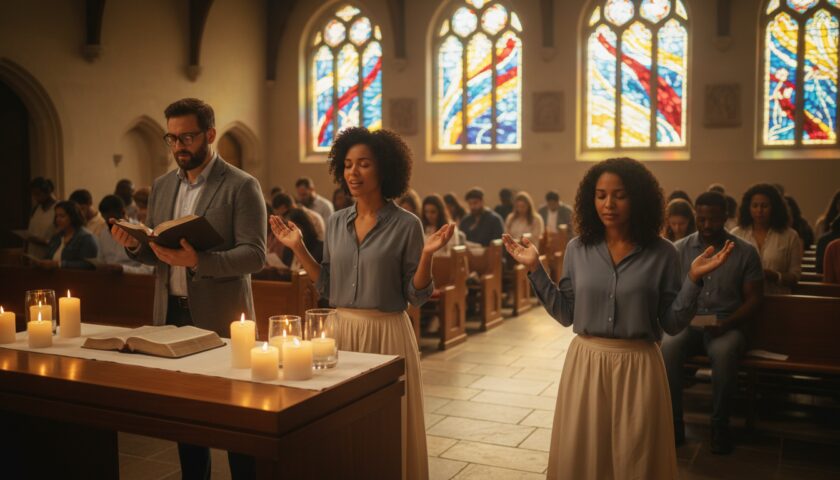
When the first notes of the prelude linger in the air, have you ever felt that the room itself leans in, waiting for the next breath of sacred story? Imagine the congregation as a flock of wandering spirits, each yearning for a moment that feels both intimate and transcendent. Leading a worship service that satisfies that hunger is a delicate art, a choreography of heart, voice, and spirit. It’s not merely about filling a schedule; it’s about orchestrating an encounter where the divine meets the everyday. The challenge, then, is clear: how can you guide a gathering so that it resonates long after the final amen, while navigating the inevitable hiccups that testing time inevitably brings?
Embracing the Sacred Narrative
Every worship service is a story waiting to be told. Before the first hymn, pause to ask: what narrative thread will bind the morning together? This might be a theme from the lectionary, a seasonal celebration, or a community milestone. By rooting each element—prayer, song, Scripture, reflection—in this central motif, you create a coherent tapestry. Think of the narrative as a golden thread that weaves through the liturgy, giving each moment purpose. When the congregation senses that continuity, they are drawn into a shared journey, rather than a series of isolated rituals.
To embed this, begin with a brief, evocative story or question that sets the tone. A narrative opening acts like a cinematic opening shot, inviting the audience into the world you’ll explore together.
Curating the Liturgical Environment
The physical space whispers before the first word is spoken. Lighting, seating, and even the scent of the room can shape how participants engage. Soft, warm lights invite contemplation; bright, harsh lighting can unintentionally energize or distract. Arrange chairs in a semicircle or gentle arcs to foster eye contact and communal warmth, rather than sterile rows that mirror a classroom.
Modern technology, while a boon, can become a double‑edged sword. Ensure that the sound system,投影, and any digital projections are tested well in advance. A brief checklist—mic levels, hymn displayed on screen, battery backup for the clicker—prevents the abrupt silence that can shatter the worship mood. In moments when the tech falters, having a simple printed lyric sheet or a well‑trained cantor can keep the flow alive, turning a potential crisis into an intimate, spontaneous experience.
Designing a Coherent Flow
Structure is the skeleton upon which the spirit hangs. A well‑designed order respects the natural rhythm of attention: opening prayer, confession, proclamation of the Word, sermon, response, and dismissal. Each transition should feel like a gentle breath, not a jarring jolt. Use transitional phrases or brief silences to signal the shift from one segment to the next. For example, after the Scripture reading, a pause followed by a quiet “Let us respond” can prepare hearts for the hymn of response.
Consider the pacing as a musical score. Fast, upbeat praise songs might be balanced by slower, contemplative medleys. Vary the tempo and dynamic range: a sonorous anthem can swell into a whisper, then rise again, creating an effervescent soundscape that sustains engagement.
Infusing Music and Scripture with Life
Music is the vehicle that often carries the congregation beyond words alone. Choose songs that echo the theme of the day, blending familiar classics with fresher compositions to keep the repertoire vibrant. Invite a vocalist or instrumentalist who can convey the emotional nuance of each lyric, turning a simple chord into a conduit for grace. When a leader sings with conviction, even a single note can feel like an incantation that draws the holy nearer.
Scripture, too, deserves a dramatic delivery. A well

