

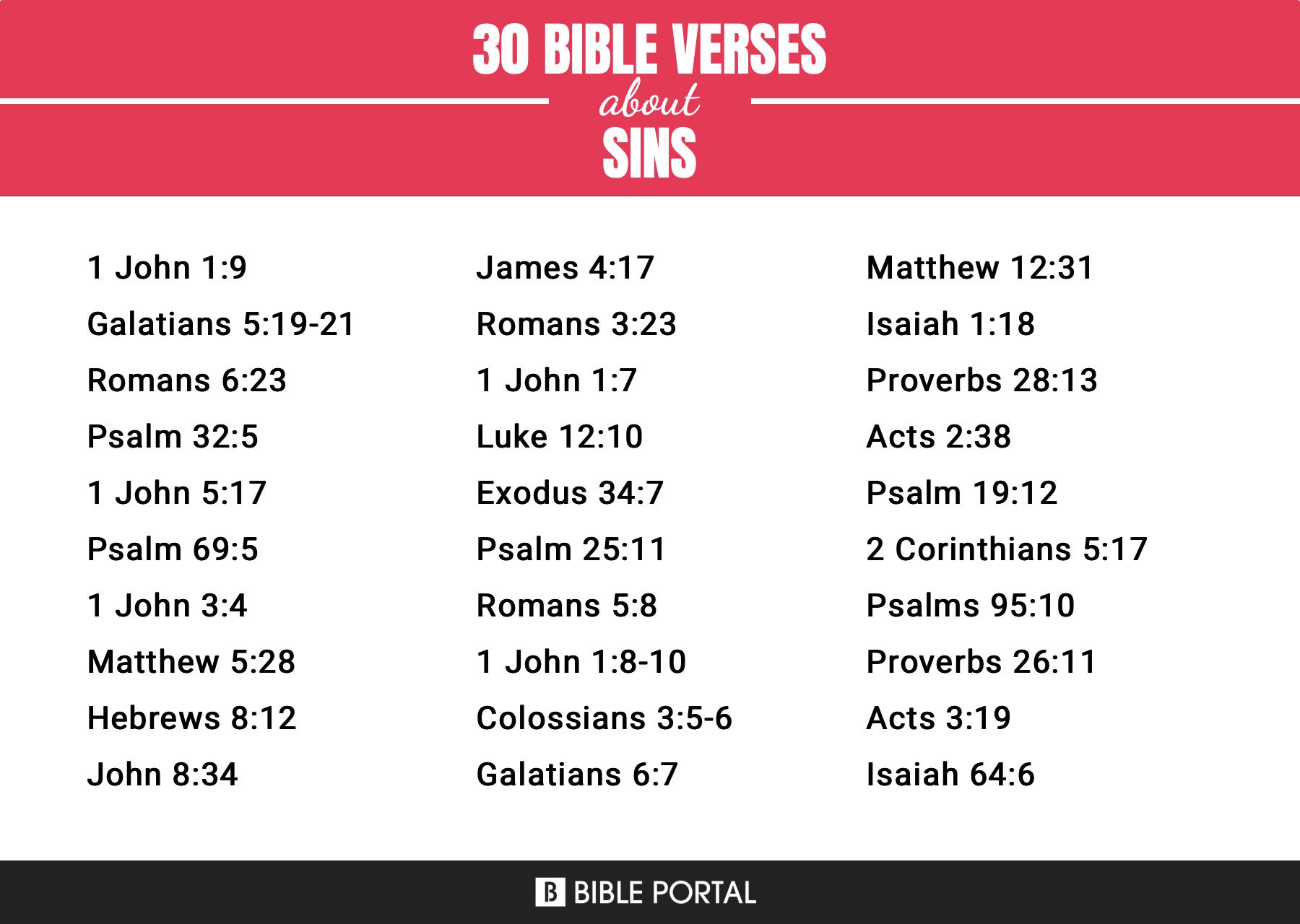
In the grand tapestry of human existence, sins are the dark threads woven into the fabric of morality. The Bible offers a comprehensive and nuanced perspective on sin, often utilizing allegory and metaphor to convey profound truths. Many perceive sins merely as transgressions; however, they are more accurately described as separations from the divine, pitfalls on the road to spiritual fulfillment. The Bible elucidates various dimensions of sin, illustrating their nuances and consequences.
At its core, sin is defined as a violation of God’s laws. The initial encounter with sin can be traced back to the Garden of Eden, where the fruit of knowledge became a metaphorical Pandora’s box, unleashing an array of moral dilemmas upon humanity. This narrative signifies the inception of humanity’s struggle with temptation, encapsulating the essence of sin as both a rebellion against divine authority and an invitation for chaos.
Sins can be categorized into different types, each illuminating distinct aspects of human behavior and moral decision-making. “Original sin,” for instance, refers to the innate propensity for wrongdoing inherited from the first humans. This condition serves as an underlying current, suggesting that humans are predisposed to err. The allegorical nature of original sin is not merely about individual choices but extends to the collective human experience, resonating through generations like an echo in a vast canyon.
Another important categorization is the distinction between mortal and venial sins. Mortal sins, akin to a searing blaze consuming a forest, are grave transgressions that result in the severance of one’s relationship with God. These are not merely missteps; they are actions that forsake the divine for the temporal. Conversely, venial sins resemble flickering embers, minor infractions that, while detrimental, do not culminate in total alienation from the divine essence. This differentiation offers a framework for understanding the gravitas of moral choices and their effects on the soul.
Among the most frequently discussed sins are those enumerated in the Ten Commandments. Each commandment serves as a moral beacon, guiding individuals toward righteous conduct. Violating these edicts transforms one’s spiritual journey into a labyrinthine quest for redemption, often fraught with obstacles. Consider theft, for instance—a transgression that erodes trust and sows discord. Each commandment operates not only as a guideline but also as a reflection of divinely inspired order, meant to sustain communal harmony.
The Bible also delves into the subtler shades of sin through the notion of “sins of omission.” These are failures to act when one is called to do so, akin to a lighthouse standing silent when a storm threatens a ship’s safe passage. Neglecting opportunities for compassion and kindness reverberates through the realms of human connection, suggesting that sin is not only about actions taken but also about the void left by actions unfulfilled.
Forgiveness, a recurring theme within biblical texts, highlights the transformative power of grace in the face of sin. It is as though the divine hand extends a lifeline, inviting the errant soul back into the fold. This dynamic interplay between sin and forgiveness creates a narrative arc of redemption, illustrating humanity’s perpetual struggle and the boundless potential for grace. Such themes are not merely theological constructs but resonate deeply with the human experience, fostering a sense of hope amidst despair.
In essence, the biblical conception of sin is an intricate dance between moral failure and the possibility of redemption. It creates a compelling moral landscape where every transgression is both a step away from divine harmony and an opportunity for personal growth. Understanding sin in this multifaceted manner allows individuals to navigate their spiritual journeys with a renewed sense of purpose and an appreciation for the nuances of human morality.

