

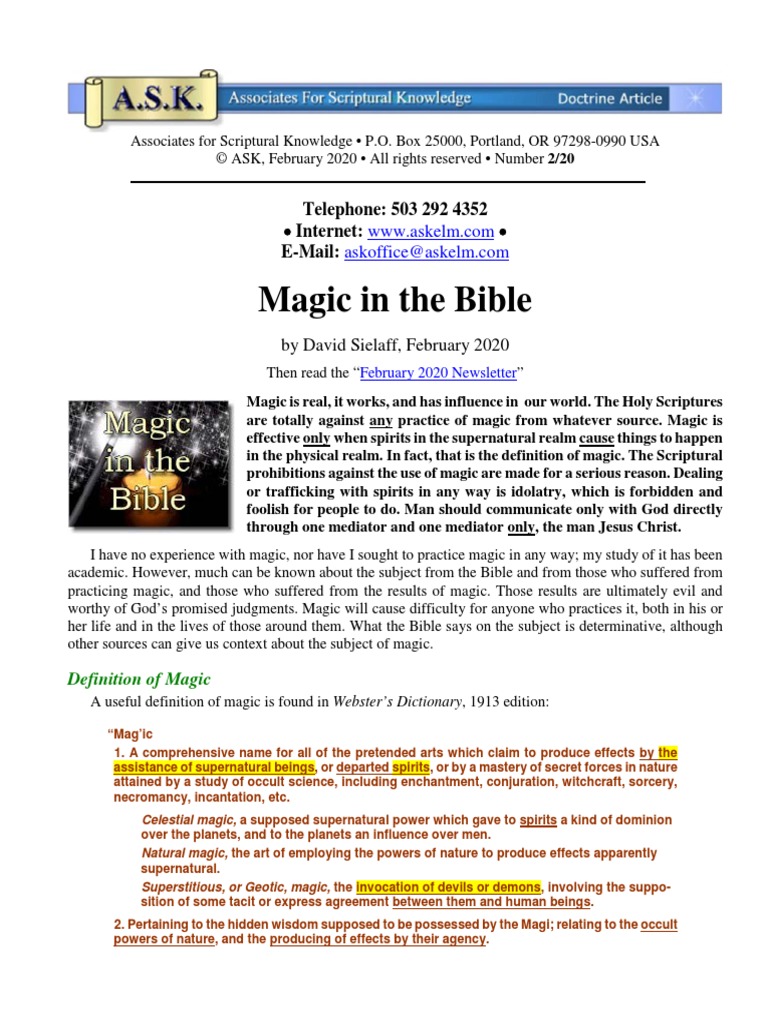
The discourse surrounding magic in the Bible is both profound and multifaceted. Throughout the text, various instances of magic and supernatural occurrences unfold, leading readers to contemplate their implications within the broader theological narrative. This exploration can be categorized into several key themes, each elucidating a different aspect of the biblical perspective on magic.
Firstly, it is imperative to delineate the types of magic mentioned in biblical scripture. The Bible often refers to magic in terms of sorcery, witchcraft, and divination. Sorcery typically involves the manipulation of hidden powers to achieve desired outcomes, while witchcraft is frequently depicted as an illicit practice invoking malevolent forces. Divination, on the other hand, encompasses various forms of attempting to discern the future or uncover the divine will through mystical means. These categorizations underscore the nuanced understanding prevalent in biblical narratives.
One of the primary sources reflecting the Bible’s stance on magic is found in the Old Testament, particularly in the book of Exodus. The narrative documents the confrontation between Moses and the magicians of Pharaoh’s court. Notably, when Moses performs miracles by the power of God, the magicians initially replicate some wonders through their sorcery. However, as the plagues escalate, it becomes evident that divine authority supersedes any human capability, rendering their magic ineffective. This theme of moral superiority of divine acts is consistently echoed throughout later scriptures, signifying a clear demarcation between divine power and human wizardry.
In Leviticus, the condemnation of witchcraft and associated practices reinforces a stringent biblical stance against magic. The law explicitly states, “You shall not suffer a witch to live,” elucidating the severity with which such practices were viewed in ancient society. The emphasis is placed on the inherent danger associated with engaging in magic, positing it as a defiance of God’s sovereignty. This prohibition stretches into the New Testament, where similar warnings against sorcery appear, suggesting an enduring biblical perspective that equates magic with disobedience to divine law.
Moreover, the significance of faith emerges as a counter-narrative to the allure of magic. The New Testament often portrays Jesus and his miracles as manifestations of divine power that stand in stark contrast to sorcery. Accounts of Jesus healing the sick, restoring sight, and even raising the dead serve as testimonies to divine intervention. The miracles performed by Jesus underscore the idea that true power comes from God, inviting believers to seek faith over supernatural tricks. The transformation of lives and circumstances through faith further cements its role as a crucial theme within biblical texts.
Another key point of contention in the scriptures is the relationship between magic and idolatry. Throughout both the Old and New Testaments, the practice of magic is frequently associated with idol worship. The entanglement of these two elements often leads to moral decay and social strife, as they divert individuals from the worship of the One true God. The consistent admonishment against idolatry serves as a reminder of the spiritual dangers posed by magic, which not only distracts believers but also fosters disunity within communal faith.
Lastly, the eschatological implications of magic are explored, particularly in the Book of Revelation. Here, sorcery is mentioned among the sins that will lead to ultimate judgment. This portrayal serves as a stark warning for future generations, affirming the belief that engaging in magic aligns individuals with forces opposed to divine order. The culmination of this theme is a call to discernment, urging believers to remain steadfast in their faith against the seductive allure of magic.
In conclusion, the biblical narrative provides a comprehensive framework for understanding magic. By examining various aspects such as its manifestations, moral implications, and the juxtaposition with faith, readers gain a deeper insight into the text’s profound warning against such practices. The overarching message is clear—true power resides not in magic, but in unwavering devotion to God and the divine mysteries that unfold through faith.

