

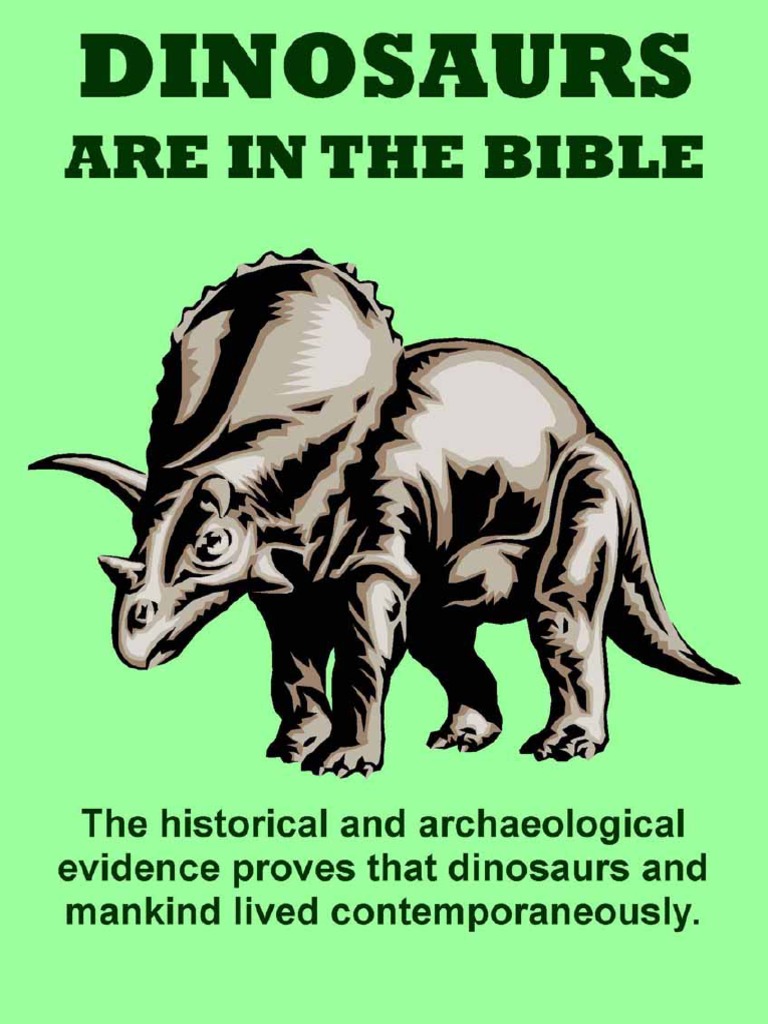
Dinosaurs, the majestic giants of the prehistoric world, elicited fascination and wonder that transcends the ages. These magnificent creatures, whose existence graced the Earth for over 160 million years, beg the question: what does the Bible say about them? An inquiry into this intersection of faith and science unveils a tapestry woven with intrigue, speculation, and rich metaphor.
To embark on this exploration, it is crucial to understand the context of ancient texts. The Bible, composed in a time when the knowledge of paleontology was non-existent, engages readers with vivid depictions of beasts that might very well evoke images of dinosaurs. Consider the creature known as the “Behemoth,” described in the Book of Job. Its immense form, depicted as a land animal of unparalleled strength, may mirror the formidable structure of dinosaurs like the Brachiosaurus. The Biblical text presents a creature that “moves its tail like a cedar,” suggesting the magnitude of its physique, akin to the grandiosity of these long-extinct reptiles.
Metaphorically, the Behemoth stands as a symbol of God’s creativity and power—a reminder of the Creator’s ability to design wondrous beings, both seen and unseen. While the text does not explicitly name the dinosaurs, the imagery conjured by such descriptions ignites the imagination. The idea that these colossal beings could have been part of a divinely orchestrated creation serves to meld the realms of spirituality and the natural world seamlessly.
Another significant figure within the Biblical context is the “Leviathan,” often interpreted as a sea monster or dragon. This enigmatic being expresses the chaos and fearsome power found in the depths of the ocean. Just as the Leviathan may evoke thoughts of ancient aquatic reptiles, the metaphor extends to mirror humanity’s struggle against the unknown. In both instances, whether considering land-dwelling beasts or beings of the deep, these Biblical creatures reflect not only the awe of creation but also humanity’s desire to untangle life’s mysteries.
Critically, the correlation between dinosaurs and the Biblical narratives sparks dialogue about the intersection of faith and science. Some proponents of creationism argue that fossils are remnants of creatures that lived during the time of early humans. This perspective encourages a broader conception of history—one that embraces the possibility of cohabitation between man and these prehistoric titans. However, others maintain a more traditional view, placing dinosaurs within a vast geological timeline that predates human existence.
This discussion exposes a dichotomy; in one corner lies the empirical rigor of scientific inquiry, while the other champions the poetic nature of scripture. Yet, this duality encourages a synthesis—a chance for both narratives to coexist and enrich one another. The allure lies in the realization that both science and scripture share a fundamental quest for understanding.
Moreover, as explorations continue into the wonderful world of dinosaurs, they offer striking parallels to our own existence. They remind us of transient glories and the impermanence of life; though these titans ruled the Earth, they eventually succumbed to extinction. From their spectacular rise to their poignant fall, creatures like the Tyrannosaurus rex symbolize the cycle of life: grandeur and decay intertwined.
In contemplating the Biblical connection to these extraordinary beings, we unlock deeper meanings. Scriptures provide a canvas for reflection—a landscape where faith meets the mysteries of nature. By engaging with such paradoxes, we honor the profound complexity of existence. Whether viewed through the lens of science or scripture, the narrative of dinosaurs invites perpetual curiosity, urging us to delve deeper into the stories that shape our understanding of the world and our place within it.

