

Throughout the annals of human history, celestial events have sparked intrigue, awe, and a sense of foreboding. Among these, the phenomenon of the “blood moon” holds a particularly significant place within biblical texts. This term, often defined by the reddish hue that lunar eclipses assume, is steeped in both astronomical and theological implications, igniting curiosity about its spiritual connotations and prophetic interpretations. To embark on this exploration is to engage with the dualities of fear and hope, and to consider the broader implications of celestial signs in relation to humanity’s journey with divinity.
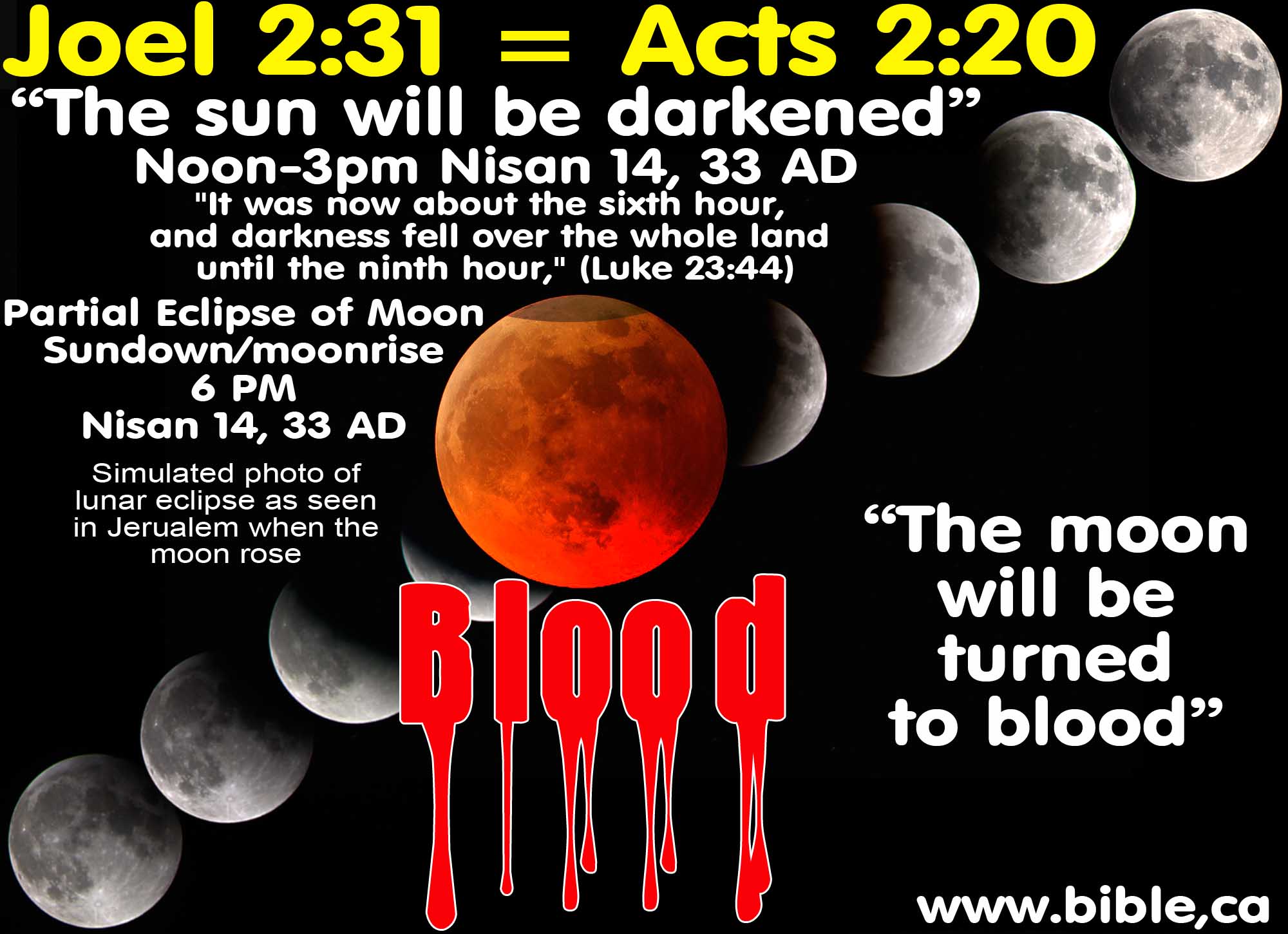
In the Bible, the occurrence of blood moons is primarily mentioned in the prophetic literature, notably in the book of Joel and reiterated in the New Testament in Acts. Joel 2:31 states, “The sun shall be turned to darkness, and the moon to blood, before the great and awesome day of the LORD comes.” This passage suggests a pivotal transformation in the natural order, marking significant moments of divine intervention. But what does this mean for us today? What can we infer from such proclamations about the nature of God’s promises?
To understand the blood moon’s implications, we must first delve into its context. Lunar eclipses, which cause the moon to appear red, are rare occurrences. In biblical times, such events were often interpreted as omens or signs from God. They were perceived as calls to repentance, reminders of mortality, and declarations of God’s sovereignty over the cosmos. Theologians argue that the blood moon epitomizes God’s transformative approach towards humanity, symbolizing a moment where the familiar is mysteriously altered, allowing for new revelations and the awakening of consciousness.
The symbolism of the blood moon extends beyond mere celestial mechanics; it taps into a deeper narrative of salvation and judgment. For countless generations, the dual themes of fear and hope have intertwined seamlessly with mankind’s quest for understanding the divine. Blood moons represent a pivotal moment where believers are urged to reflect upon their lives, aligning themselves with the transformative power of faith. They provoke a critical reassessment of one’s life choices, beckoning individuals towards introspection and greater spiritual fidelity.
By presenting these celestial phenomena as heralds of change, the biblical narrative encourages believers to adopt a posture of vigilance. The shifting nature of the moon evokes the dynamism of God’s presence in the world—a reminder that divine influence is not ephemeral but is consistently involved in the ebb and flow of human existence. The expectation that these signs will precede a significant divine act invites an engaging dialogue about personal faith and collective experience.
Diving deeper into the occurrences of blood moons, we encounter the concept of “signs of the times.” In the New Testament, Jesus speaks of the signs that would precede the end of days, emphasizing the importance of being spiritually attuned when such events unfold. This notion complicates the relationship between celestial events and divine promise, urging believers to remain vigilant yet hopeful, anticipating that God’s plan encompasses both the daunting and the benevolent.
Even within these solemn themes, the biblical narrative surrounding blood moons beckons with a promise of renewal and restoration. They invite individuals to perceive challenges not merely as circumstantial hardships but as transformative invitations from a higher power. Each red moon becomes a conduit through which divine teachings may be revealed—reminders of God’s unwavering love and the perpetual chance for redemption that exists even in dark times.
The recurring motif of blood moons also serves as an allegory for critical transitions in life. It reveals the necessity of letting go of outdated paradigms and embracing new beginnings. For instance, just as the moon transitions through cycles, believers are reminded of the inherent cycles within their own lives. The appearance of a blood moon may signify personal trials or collective tribulations, yet it also opens the door to renewal and the promise of a better future.
Engagement with the blood moon phenomena invites us to question the broader implications of celestial signs. How do we interpret these moments in light of contemporary societal challenges? As the earth grapples with unprecedented ecological changes, social upheaval, and existential threats, the blood moon can serve as a symbolic overture—an invitation to weave together our spiritual aspirations with our duty to protect and steward the planet responsibly.
In conclusion, the blood moon stands as a multifaceted symbol rich with theological and existential significance. Its resonance with the themes of transformation, vigilance, and renewal offers a profound invitation to reflect on the nature of divine interaction in both personal and communal contexts. Just as the moon illuminates the darkened sky, these biblical accounts of blood moons urge believers to seek enlightenment amidst complexity, to embrace divine promises, and to foster a hopeful perspective that encourages engagement with both the earthly and the ethereal. The blood moon, thus, is not merely an astronomical event but a celestial herald, beckoning humanity toward introspection and action in its journey towards understanding the divine promise.

