

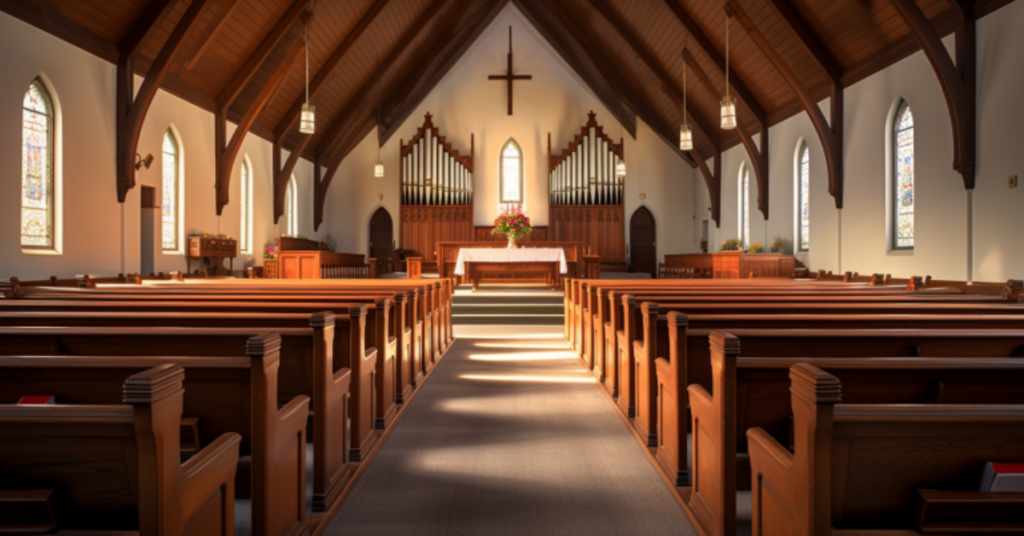
The landscape of Christianity is richly diverse, akin to a vast garden where countless flowers bloom in various shapes, sizes, and colors. Among these beautiful varieties lies a special segment known as non-denominational churches—intriguing repositories of spiritual nourishment. Their essence stirs conversations, curiosity, and sometimes even contention. So, what exactly does the Bible say about these congregations that stand apart from traditional denominations?
First, it is essential to understand the root of non-denominationalism. Drawing inspiration from Scripture, these churches aim to transcend the constraints of denominational labels, seeking a purer expression of faith based solely on biblical teachings. They often emphasize the authority of the Bible as the primary guide to their beliefs and practices, presenting an allure of simplicity and direct access to God’s word. This appeal echoes the sentiment of Matthew 18:20: “For where two or three gather in my name, there am I with them.”
As one delves into the heart of Scripture, it becomes evident that the early Christian community was inherently non-denominational. The Church was a united body, devoid of the partitioning of beliefs and practices that we witness today. Acts 2:44-47 presents a poignant portrayal of believers sharing their lives and resources, highlighting a harmonious existence centered around devotion, fellowship, breaking of bread, and prayer. In this light, non-denominational churches can be likened to time capsules—transporting modern worshippers back to the authentic, communal experience that characterized early Christianity.
Moreover, non-denominational churches thrive on the principle of inclusivity. Much like a broad river that accommodates tributaries, these congregations often embrace individuals from various backgrounds and perspectives. The foundation is built on fundamental doctrines while allowing for a spectrum of interpretations and expressions of worship. Galatians 3:28 eloquently encapsulates this ethos, proclaiming that in Christ, there is neither Jew nor Gentile, neither slave nor free, nor is there male and female; for all are one. This inclusion serves as a welcoming mat, inviting individuals who have felt marginalized by traditional church frameworks.
However, not all perspectives surrounding non-denominational churches are positive. Critics argue that the absence of structured theology and governance can lead towards a subjective interpretation of Scripture, diminishing doctrinal integrity. This critique highlights an essential challenge faced by non-denominational congregations: cultivating an environment where the vibrancy of faith does not succumb to anarchy or dilution. The delicate balance between freedom and responsibility is crucial, as exemplified in 1 Corinthians 14:40, which states, “But everything should be done in a fitting and orderly way.”
Despite the complexities, the unique appeal of non-denominational churches cannot be disregarded. These congregations often embody a dynamic worship style, utilizing contemporary music, multimedia presentations, and innovative teaching methods that resonate with today’s generation. They serve as a bridge, connecting individuals to a relational understanding of God that feels relatable and accessible. The metaphor of a lighthouse aptly describes their role—shedding light on the path towards spiritual discovery and growth amidst the fog of modern challenges.
In conclusion, non-denominational churches occupy a distinctive niche within the Christian community, often embodying simplicity, inclusivity, and contemporary relevance. They invite individuals to explore an unfiltered relationship with God, deeply rooted in biblical principles while traversing the complex realities of the contemporary world. As believers continue to seek authentic expressions of faith, the answers found within these congregations remain compelling, providing a sanctuary where faith flourishes without the burden of denominational confines.

