

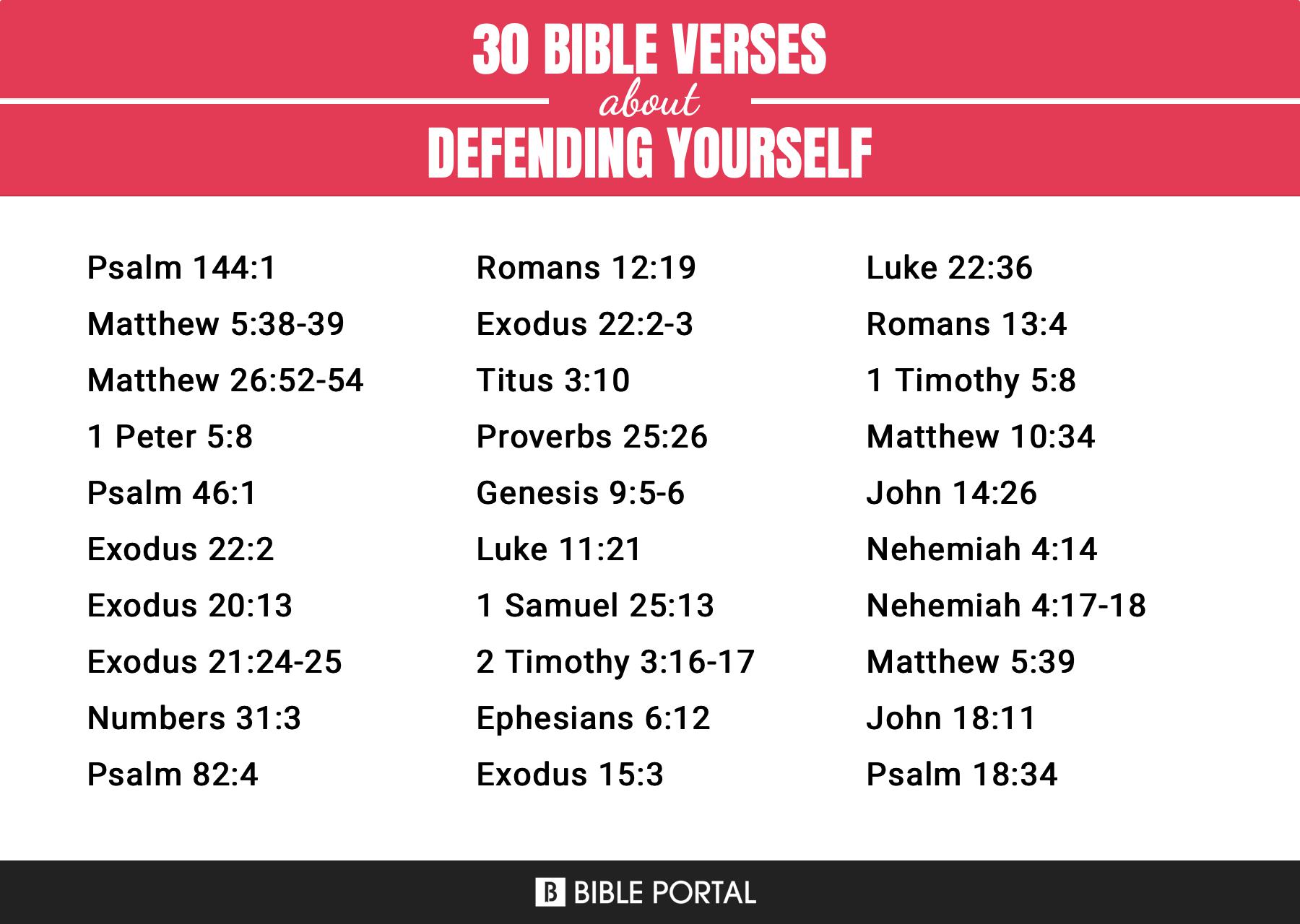
The Bible, a tapestry woven with timeless wisdom and profound truths, often reflects on the concept of self-protection. At first glance, one might perceive biblical texts as primarily spiritual or moral in focus. Yet, nestled within its verses are profound insights regarding the intricate dance between vulnerability and defense. The art of protecting oneself is explored with complexity, urging individuals to strike a delicate balance between openness and self-preservation. As the ancient texts unfold, they reveal that safeguarding oneself is not only a necessity but also an act rich with moral implications.
Throughout scripture, the metaphor of armor is heroically invoked. In the Book of Ephesians, Paul employs the metaphor of the “Armor of God.” This imagery elucidates the idea that spiritual readiness is paramount in facing adversities. Just as a soldier dons physical armor to shield against external threats, believers are advised to equip themselves with virtues—truth, righteousness, faith, and the Word of God—as impenetrable defenses against the onslaught of despair and temptation. This parallel draws attention to a profound truth: protecting oneself involves a holistic approach, engaging both the spiritual and emotional realms.
Moreover, the wisdom literature of the Old Testament provides a deeper understanding of self-defense through the lens of discernment. Proverbs, often regarded as a compendium of wise sayings, delivers practical guidance on navigating life’s challenges. One pithy verse states, “The prudent see danger and take refuge, but the simple keep going and pay the penalty.” This injunction extols the virtue of foresight—an intrinsic aspect of protecting oneself. It implores individuals to cultivate an astute awareness of their surroundings, recognizing potential perils and judiciously retreating when necessary. In this light, self-protection is portrayed not as an act of cowardice but as an intelligent strategy in the journey of life.
In instances of personal conflict, the Bible’s teachings challenge adherents to balance assertiveness with compassion. Matthew 5:39 famously encapsulates this paradox with the phrase, “Turn the other cheek.” At first blush, this admonition may seem to advocate for passivity in the face of aggression. However, a closer interpretation reveals a profound depth. Turning the other cheek does not imply acquiescence to violence or abuse; rather, it calls for a courageous, principled stand against injustice without yielding to further animosity. This radical approach serves as a potent reminder that true strength is often exhibited through restraint and dignity—an art form rooted in self-respect rather than revenge.
The narrative of David and Goliath also provides a poignant illustration of self-defense. Here, David, a young shepherd, confronts the towering giant with determination and faith. Instead of relying solely on earthly powers—such as armor or weapons—David employs his unique skills, drawing strength from his connection with the divine. This tale resonates deeply in the hearts of many; it encourages individuals to harness their authentic competencies and inner resilience in moments of confrontation. Protecting oneself is not merely about physical might, but about aligning with one’s true self, channeling inner capabilities, and fostering an unwavering faith.
Furthermore, the act of protecting oneself often extends beyond the individual realm, intertwining with the well-being of the community. The biblical injunction to “love your neighbor as yourself” accentuates the reciprocal nature of self-protection and communal responsibility. By nurturing one’s own well-being, individuals inadvertently enhance the collective health of their communities. This interconnectedness illustrates a crucial aspect of biblical wisdom: the idea that safeguarding oneself and one’s community is not mutually exclusive but rather a harmonious endeavor. Protecting oneself contributes to the broader tapestry of societal resilience.
As one delves into the New Testament, Jesus’s parables further illuminate the importance of self-awareness in the context of protection. In the parable of the wise and foolish builders, the prudent foundation serves as an apt metaphor for personal fortification. Those who anchor themselves in solid principles and wisdom are less susceptible to life’s tempests. Similarly, it emphasizes the essence of building a life on spiritual truths, which serve as steady ground amidst the tumultuous seas of existence. The call to action is clear: individuals must actively construct defenses around their values and beliefs to fortify against external adversities.
Lastly, while protecting oneself is a paramount theme throughout scripture, it is crucial to acknowledge that true protection often stems from vulnerability and connection with others. In the Book of Ecclesiastes, the wisdom of companionship is poignantly articulated—”Two are better than one, because they have a good reward for their toil.” This recognition emphasizes that the path to safeguarding oneself is not one trodden alone; rather, it flourishes within communion and support from others. By fostering relationships built on trust, love, and understanding, individuals can create a protective network, making them less susceptible to the harsh winds of isolation and despair.
In conclusion, the Bible offers profound reflections on the multifaceted nature of self-protection. From the armor of faith to the wisdom of discernment, the sacred texts invite deep contemplation on how to navigate the delicate interplay between strength and vulnerability. Protecting oneself is a noble pursuit that calls for courage, wisdom, and community. In embracing this journey, individuals not only safeguard their own well-being but also contribute to the flourishing of the world around them. Thus, the biblical call to action resonates: to protect oneself is not just a personal endeavor, but a profound commitment to the tapestry of life itself.

