

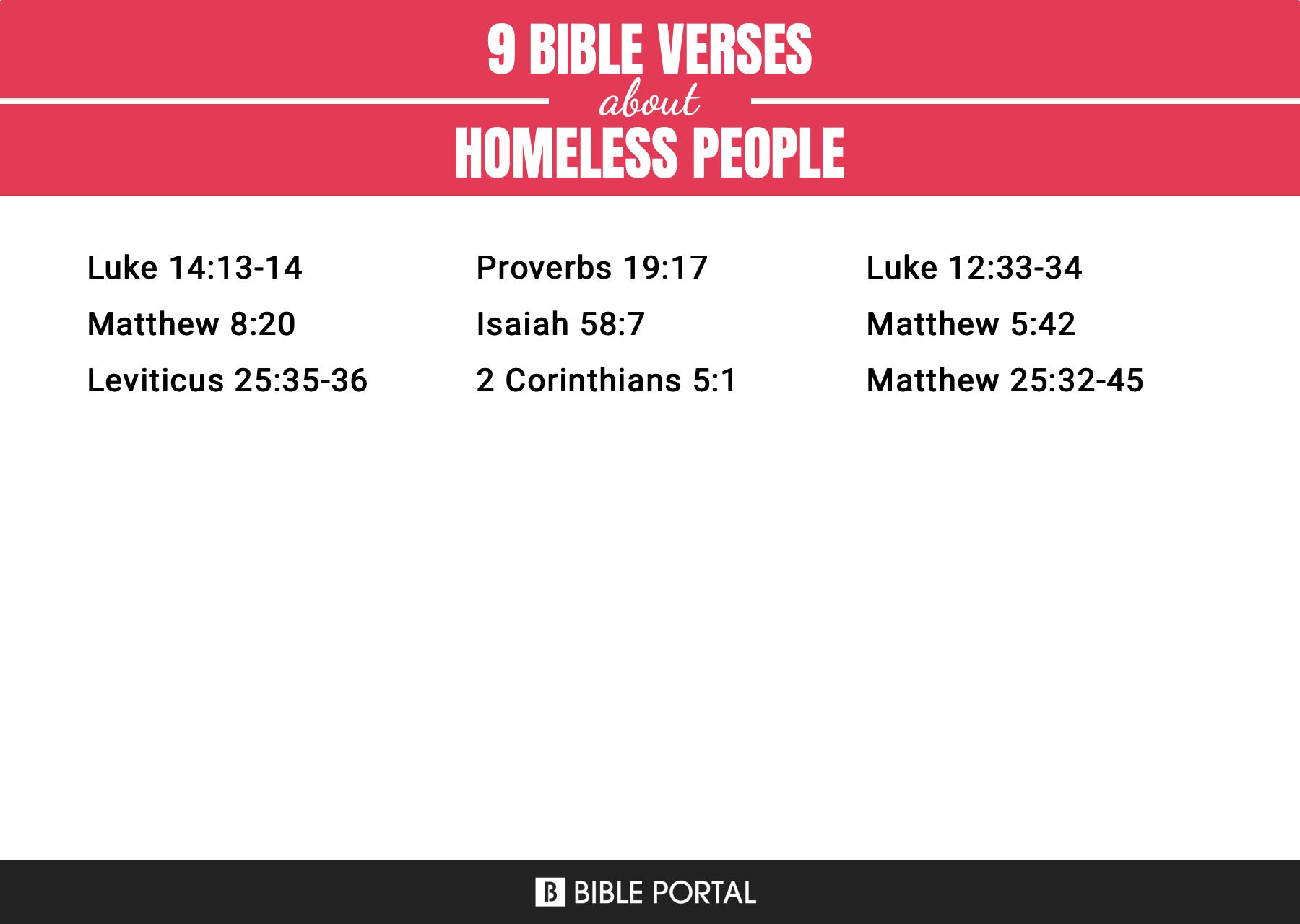
Throughout history, the plight of homeless individuals has stirred profound concern among societies worldwide. This issue finds resonance in the biblical texts, where the Scriptures provide guidance on compassion, justice, and the fundamental dignity of every human being. Understanding what the Bible articulates regarding homelessness reveals deeper insights not only into the divine perspective but also into societal responsibilities that echo through the ages.
At the heart of biblical teaching lies an unwavering call to serve and support those in need. Scriptures such as Deuteronomy 15:7-8 urge believers to be generous and open-handed towards the poor, emphasizing that one’s heart must not be hard or tight-fisted. This pivotal instruction not only highlights the ethical obligation to aid the less fortunate but also suggests a fundamental understanding of human interconnectedness. The essence of generosity advocated in the Bible is more than mere charity—it embodies a commitment to fostering a community where dignity prevails over destitution.
Moreover, the New Testament amplifies this theme with resounding clarity. In Matthew 25:35-40, the teachings of Jesus impart a striking insight: caring for the least of society is tantamount to serving Him. This notion of identification with the marginalized underscores the intrinsic value of every individual, regardless of their social status. By linking acts of kindness toward the homeless with divine service, the Scripture compels believers to contemplate the divine presence in unexpected forms. It persuades us to recognize that homelessness is not just a societal failing; it reflects the plight of humanity itself, one that demands empathy and action.
The Bible also articulates a vision of justice that transcends mere almsgiving. In Micah 6:8, the prophetic cry to “do justice, love mercy, and walk humbly with your God” presents a triad of virtues that are essential for societal transformation. Justice becomes a proactive approach rather than a reactive measure. It inspires communities to confront systemic issues such as poverty, inequality, and the circumstances that lead to homelessness. Addressing homelessness from a scriptural standpoint is, therefore, not solely about providing shelter. It involves questioning and dismantling the societal structures that perpetuate disenfranchisement and despair.
This urgency to rectify societal ills is palpable in the narratives of Jesus, particularly illustrated through His parables. The Good Samaritan stands as a poignant example of compassionate engagement (Luke 10:25-37). The Samaritan’s response to the destitute traveler symbolizes an active commitment to alleviate suffering, irrespective of societal prejudices. This account invites believers to reassess their biases and urges them to extend their hand to those who are often overlooked or marginalized based on circumstantial judgments.
Further enhancing the biblical discussion on homelessness is the notion of community. The early church, as depicted in Acts 2:44-45, reveals a model of shared resources, where believers pooled their possessions to ensure that no one was in need. This prophetic communalism serves as a counter-narrative to contemporary individualism and imbues a sense of responsibility toward collective well-being. Through this lens, addressing homelessness is not merely an act of charity; it becomes a communal obligation that is rooted in love, sacrifice, and righteousness.
In conclusion, the Bible offers profound and multifaceted insights into the reality of homelessness. It beckons the faithful to embrace a lifestyle marked by compassion, justice, and community solidarity. Homelessness, as portrayed in biblical texts, is not solely a socio-economic concern but a reflection of spiritual and moral imperatives. Engaging with the Scriptures on this topic encourages a thoughtful and holistic approach to understanding and addressing the suffering of the homeless, thus promoting a society anchored in grace and humanity.

