

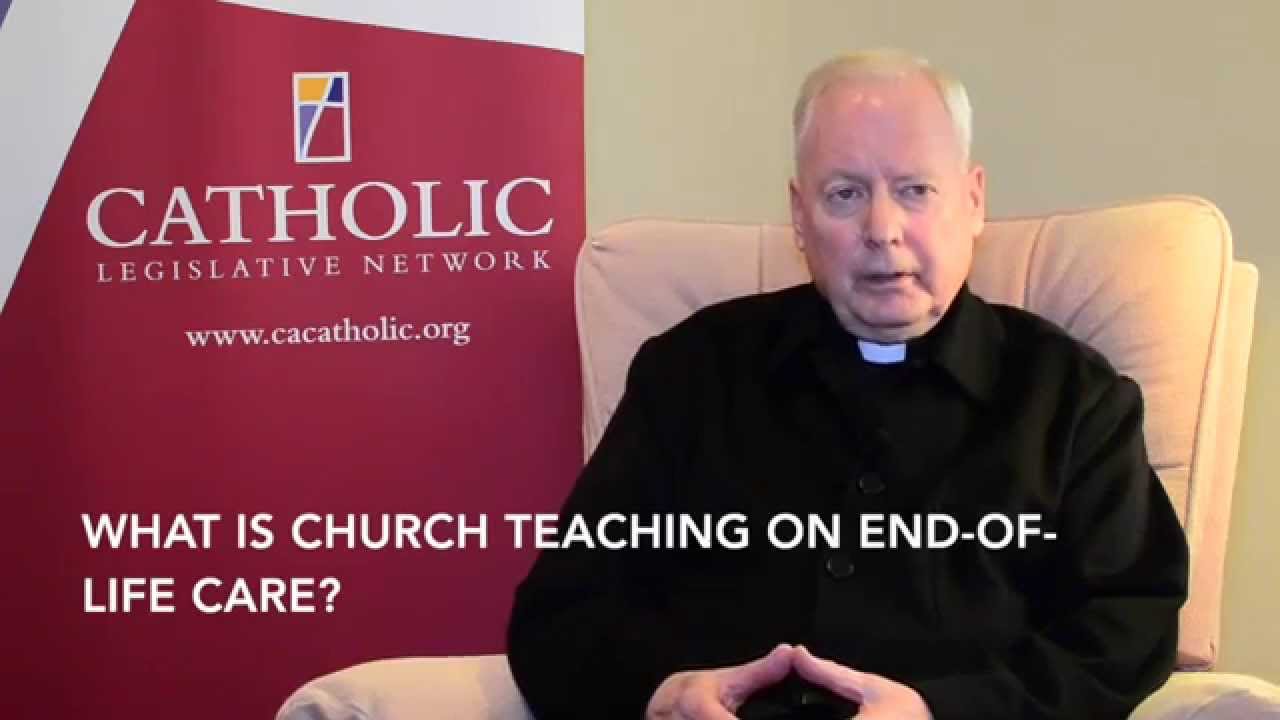
In navigating the sacred terrain where mortal frailty meets divine promise, the Church proffers a clarion call rooted in Scripture, tradition, and the living pneuma of Christ. The journey toward life’s twilight is not a solitary venture but a communal pilgrimage, wherein each breath becomes a living testament to belief in the resurrected hope. What follows is an exploration of the biblical perspective that undergirds Catholic teaching on end‑of‑life care, unveiling the manifold ways believers can encounter grace, compassion, and ethical clarity at the threshold of eternity.
Scriptural Foundations of End‑of‑Life Ethics
The biblical narrative bequeaths a profound lexicon for comprehending the final chapters of human existence. From Genesis, where God breathes “the breath of life” into Adam, to the Psalms that declare “the LORD is my shepherd; I shall not want,” the Sacred Scriptures frame life as a gift bestowed by the Creator, not a possession to be wielded at will. The prophetic oracle of Isaiah 40:31—those who hope in the LORD renew their strength—invites the faithful to view suffering not as punitive, but as a crucible for sanctification. Moreover, the Gospel pericopes, especially the miracle of Lazarus’ raising (John 11) and the parable of the Good Samaritan (Luke 10), illustrate that compassionate intervention is an echo of Christ’s own ministry. These passages collectively establish a paradigm where the sanctity of life is nonnegotiable, yet the manner of its stewardship may be nuanced.
The Doctrine of Sanctity, Dignity, and the Imago Dei
At the core of Catholic doctrine lies the affirmation that every human being bears the Imago Dei— the very likeness of the Divine. This theological axiom demands that each person, irrespective of cognitive capacity or physiological decline, retains an inviolable dignity. In the theological lexicon of “theanthropic anthropology,” humanity is viewed as a unity of body and soul, thereby rendering any act that reduces a person to mere biological matter an offense against the Creator. The Catechism of the Catholic Church articulates that “the duty to provide for the bodily and spiritual welfare of the sick” is a corporal work of mercy, underscoring that end‑of‑life care is not a optional ministry but an ecclesial imperative. Consequently, the Church resists both aggressive euthanasian interventions and the abandonment of the terminally ill, championing a balanced approach that honors the whole person.
The Role of Prayer, Sacraments, and Pastoral Presence
When the veil between the temporal and the eternal thins, the Church offers a sacramental economy that serves as a conduit of divine grace. The Anointing of the Sick, conferred through the laying on of hands with the invocation of the Holy Spirit, is a catalyst for spiritual fortitude, often accompanied by forgiveness of sins and the alleviation of angst. The Eucharist, when received viaticum, becomes the celestial nourishment for the departing soul, echoing the early patristic belief that “the body of Christ is the medicine of immortality.” Pastoral caregivers, armed with the charism of “compassionate presence,” walk beside families, offering liturgical rites, prayerful discernment, and the counseling necessary to navigate the labyrinth of medical decisions. In this narrative, the communal liturgy is not a distant ritual but a living embrace that transforms fear into hope.
Moral Guidance on Medical Interventions: Ordinary vs. Extraordinary Means
One of the most nuanced terrains of end‑of‑life ethics is the discernment between ordinary and extraordinary means of sustaining life. The Church’s moral teaching, distilled from centuries of natural law reasoning, asserts that a patient is not obligated to employ treatments that impose “disproportionate burdens”—financial, emotional, or physical—relative to the anticipated benefit. Terms such as “proportionality” and “medical futility” become pastoral compass points. For instance, the decision to forego aggressive chemotherapy that promises only marginal extension of days, while opting for palliative sedation that eases suffering, aligns with the principle of “double effect.” The Church admonishes that the intentional hastening of death remains impermissible, yet it encourages the vigilant stewardship of comfort, allowing the natural unfolding of God’s timetable.
Grief, Mourning, and the Ecclesial Community
Beyond the clinical corridors, the Church functions as a crucible of sorrow, a sanctuary where lament is sanctified into lamentation and eventually into praise. The Scriptural motif of “the valley of the shadow of death” (Psalm 23) is actualized in communal rites such as the funeral Mass, the Office of the Dead, and the annual commemoration of All Souls. Here, the concept of “intercessory memory” operates; believers intercede for the deceased, trusting in the salvific merits of Christ’s resurrection. Moreover, ministries such as bereavement groups, grief retreats, and memorial gardens extend pastoral care beyond the sanctuary, offering a narrative scaffold for processing loss. In this ecosystem, mourning is reframed as a participation in the paschal mystery—dying and rising—that aligns personal pain with the larger story of redemption.
Contemporary Applications and Ethical Dilemmas in a Technological Age
The modern epoch births unprecedented challenges: advanced life‑support systems, gene editing, and digital legacy management. The biblical paradigm, while timeless, must be re‑interpreted in light of these novel realities. Pastoral theologians invoke “the principle of stewardship,” urging that technological power be wielded with humility, never as a substitute for divine sovereignty. Discussions on “medical conscientious objection” arise when clinicians, bound by faith, refuse participation in procedures that contravene ecclesial teaching. Likewise, the burgeoning field of “palliative robotics” raises questions about the authenticity of human companionship versus synthetic empathy. The Church calls for ongoing dialogue—between bioethicists, clergy, and the faithful—to ensure that innovation remains tethered to the evangelical imperative of love, mercy, and reverence for the imago Dei.
Conclusion: Embracing the Paschal Mystery
In the grand tapestry of Catholic thought, end‑of‑life care is not a solitary act of medical technique but a vibrant enactment of the paschal mystery. It invites the faithful to walk the path of Christ—through suffering, death, and resurrection—with eyes fixed on the eschatological promise of everlasting life. By anchoring ethical decisions in Scripture, sacramental grace, and communal solidarity, the Church equips its members to confront the ultimate transition with dignity, hope, and an unwavering trust in the loving design of the Almighty.

