

In the quiet hum of pews and the flicker of candlelight, a church’s greatest dreams often take root—not in grand gestures, but in the deliberate, prayerful orchestration of a capital campaign. These campaigns are not mere fundraising drives; they are sacred journeys where faith meets fiscal responsibility, where congregations awaken to their collective calling. Yet, too many churches stumble not because of lack of vision, but because of a fractured plan—one that neglects the human heartbeat behind the numbers. A well-crafted capital campaign plan is more than a spreadsheet; it is a narrative of hope, a blueprint for transformation, and a testament to a community’s willingness to rise together.
The Foundation: Clarifying the “Why” Before the “How”
Before drafting timelines or crunching numbers, a church must excavate the soul of its campaign. The “why” is not a slogan on a bulletin board; it is the gravitational pull that aligns every volunteer, donor, and prayer. Is this campaign for a new sanctuary that will echo with hymns of a growing flock? Or perhaps for a community center that will cradle the weary and the young alike? The deeper the purpose, the more magnetic the appeal. A common misstep is mistaking urgency for clarity—rushing to “fix” a leaky roof without articulating how that repair will safeguard the church’s mission for generations. The most resonant campaigns begin with a question: What story are we inviting our people to become part of?
Assembling the Dream Team: The Architects of Vision
A capital campaign is a symphony, and every instrument matters. The conductor? A visionary leadership team—pastors, lay leaders, and financial stewards—who can translate divine inspiration into actionable steps. Yet, the most overlooked players are often the congregation’s own storytellers: those who can articulate the campaign’s purpose in the language of everyday life. A retired teacher might frame the new classrooms as “gardens of curiosity,” while a young parent could envision the expanded nursery as a “haven of peace.” The team must also include a campaign chair whose credibility is unassailable—a person whose commitment to the church is as visible as their integrity. Without this blend of spiritual and practical leadership, even the most compelling vision can dissolve into noise.
Mapping the Terrain: Feasibility Studies and the Art of Listening
No campaign should launch without first listening to the ground it hopes to till. A feasibility study is not a bureaucratic hurdle; it is a sacred dialogue. It reveals not just financial capacity, but emotional readiness. Do the pews hum with enthusiasm or groan under the weight of unspoken doubts? Are there silent skeptics who fear the campaign will drain resources from missions? The most effective studies go beyond spreadsheets—they involve confidential conversations with key stakeholders, probing for the unspoken fears and hopes that shape giving. A church that skips this step risks launching a campaign that feels like a monologue rather than a shared pilgrimage. The data is important, but the whispers of the heart are sacred.
The Three-Phase Crescendo: Pledge, Celebrate, Fulfill
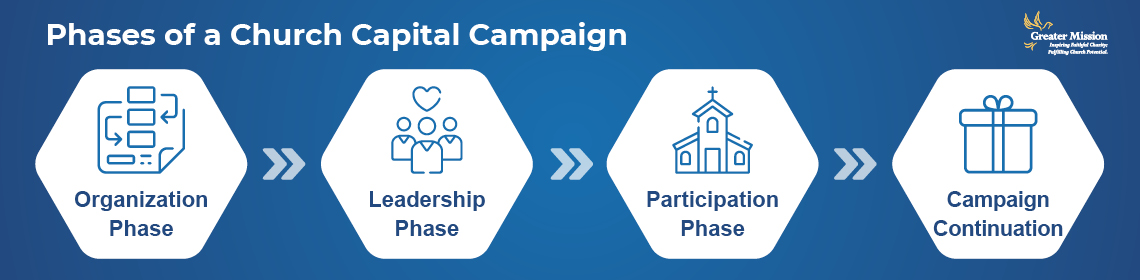
A capital campaign is not a sprint; it is a three-act play. The first act, the Pledge Phase, is where the congregation’s generosity is awakened. This is not a time for guilt or pressure, but for inspiration. Stories of transformation—how a new ministry space will birth a food pantry, or how a renovated fellowship hall will host grief support groups—must be told with vivid detail. The ask is not for money; it is for partnership in a shared dream. The second act, the Celebration Phase, is where momentum is sustained. Milestones must be marked with gratitude: a groundbreaking ceremony, a “thank-you” brunch for early givers, or a visual tracker in the sanctuary showing progress. The final act, the Fulfillment Phase, is where the rubber meets the road. Transparency is key—regular updates on construction, budget overviews, and testimonies of lives changed by the campaign’s outcome. Without this rhythm, even the most generous pledges can wither on the vine.
Overcoming the Invisible Barriers: Fear, Fatigue, and Fragmentation
The most insidious threats to a capital campaign are not external but internal. Fear, in its many disguises, can paralyze even the most committed congregations. Some may worry that a campaign will divide the church, pitting “haves” against “have-nots.” Others may fear that the project is too ambitious, a castle in the sky rather than a bridge to the future. Fatigue is another silent killer—when the same faces are asked to serve year after year, burnout becomes a self-fulfilling prophecy. And then there is fragmentation: the tendency to silo planning, where the worship team doesn’t speak to the finance committee, or where the youth group’s needs are an afterthought. The antidote? A culture of radical inclusion. Every voice must be heard, every concern addressed. The campaign must feel like a family project, not a top-down mandate. When people see their fears acknowledged and their contributions valued, the campaign ceases to be a burden and becomes a blessing.
The Ripple Effect: How Campaigns Transform Beyond the Budget
The true measure of a capital campaign’s success is not the dollars raised, but the spiritual awakening it ignites. A well-executed campaign can reawaken a church’s sense of purpose. It can turn skeptics into advocates, passive attendees into active participants, and a congregation into a movement. The new sanctuary isn’t just a building; it’s a symbol of the church’s vitality. The expanded parking lot isn’t just space; it’s an invitation to the weary and the curious. The most profound campaigns leave behind more than a completed project—they leave behind a renewed identity. They remind a church that it is not just a place of worship, but a force for transformation in the world. And that, perhaps, is the deepest magic of all.

