

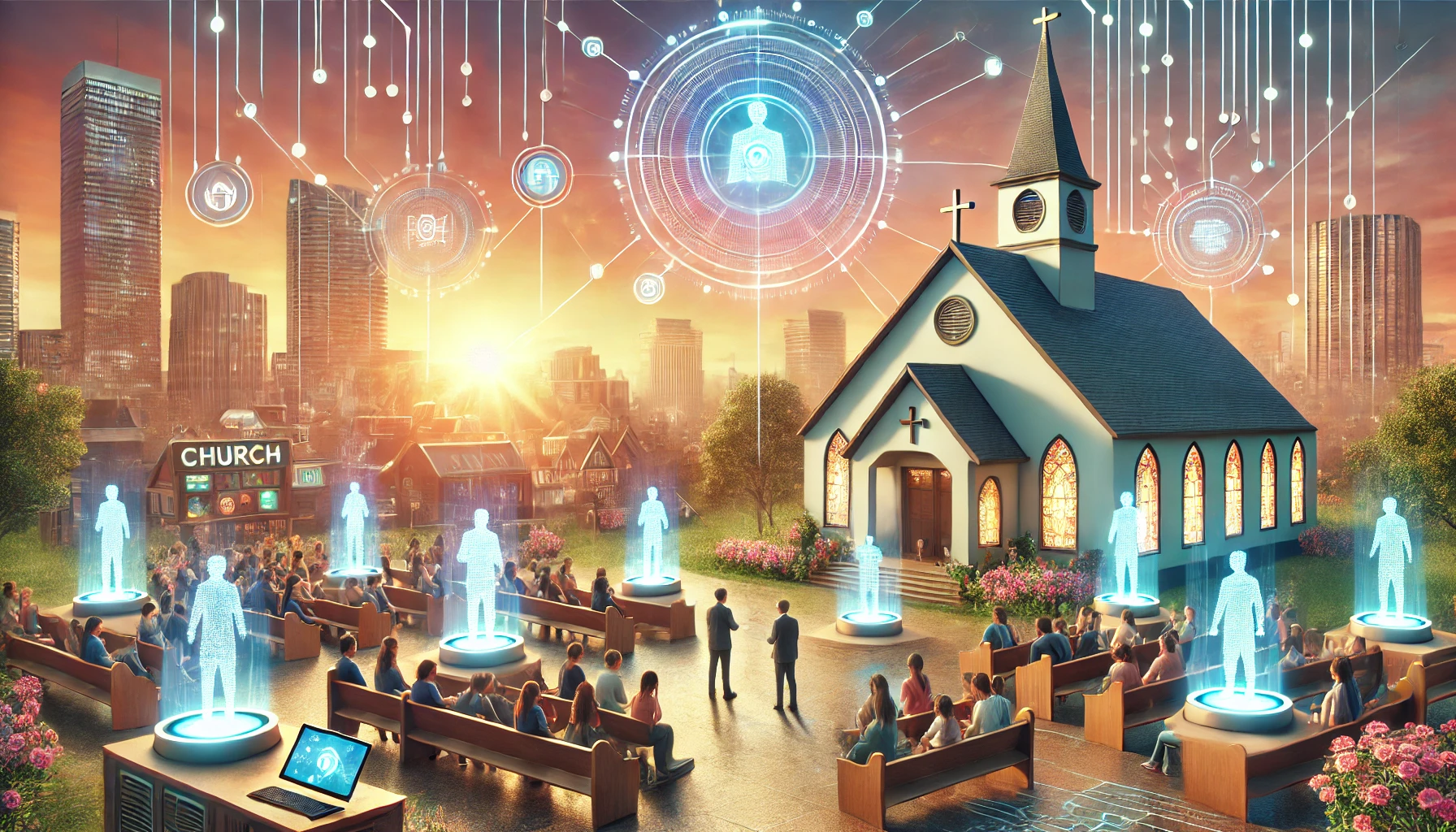
Imagine a Sunday morning where a pastor in a modest chapel in rural Texas simultaneously addresses a congregation in Nairobi and a group of college students in Seoul—all in real time, with video so crisp it feels like they’re sitting in the front pew. Could 5G, the fifth generation of wireless technology, make this level of connectivity a reality for churches seeking to expand their digital ministry? The promise is tantalizing, but it also raises questions about the delicate balance between high‑tech convenience and the timeless intimacy of worship.
The Dawn of 5G in Sacred Architecture
The deployment of 5G networks is reshaping urban landscapes, and its ripples are now lapping at the doors of churches. With theoretical peak data rates reaching 10 Gbps and latency as low as 1 millisecond, 5G offers a telecommunications substrate that can support ultra‑high‑definition streaming, immersive audio, and even augmented reality overlays during liturgy. For many denominations, this marks a departure from the era of buffered video feeds and lagging livestreams, promising a seamless bridge between the brick‑and‑mortar sanctuary and the virtual nave.
Early adopters are already experimenting with “cell‑tower sanctuaries,” installing small‑cell antennas in church towers to ensure pervasive coverage. This architectural integration does not merely boost Wi‑Fi; it transforms the building itself into a hub of ubiquitous connectivity, enabling any device—whether a smartphone, tablet, or wearable—to tap into the church’s digital ecosystem without lag.
Bridging Physical and Digital Congregations
One of the most compelling opportunities 5G offers is the ability to dissolve the boundaries between in‑person attendees and remote participants. By leveraging edge computing, churches can process video streams locally, reducing the need for heavy central servers and enabling real‑time interaction. A worshipper in another city can raise a hand, ask a question, or contribute a prayer in a live chat, and the response will appear on the sanctuary’s large screen within milliseconds.
This mediated fellowship is not merely a technological gimmick; it speaks to a deeper theological aspiration: the unity of the body of Christ across geography. In a world where commuting, health constraints, or global pandemics can prevent physical attendance, 5G‑enabled ministry can nurture a sense of belonging that transcends distance.
Real‑Time Streaming and Interactive Worship
The shift from static video feeds to dynamic, interactive worship experiences is one of 5G’s most exciting ramifications. Imagine a choir performance where the camera angles automatically adjust to follow the soloist, guided by AI‑driven analytics that respond to acoustic cues. Or envision a baptism ceremony where a 360° camera captures each droplet, allowing families abroad to experience the event as if they were standing beside the font.
Beyond aesthetics, interactivity opens doors for participatory rituals: digital communion cups that sync with the pastor’s gesture, QR‑code led prayer stations that feed personalized Scripture reflections to a congregant’s device, and live polling that gauges the spiritual pulse of a dispersed flock in real time. These features can be woven into a service without disrupting its sacred flow, provided the technology is thoughtfully integrated.
Data‑Driven Ministry: Analytics and Personalization
5G’s high‑throughput capacity enables churches to collect, analyze, and act on data at an unprecedented scale. Attendance patterns, engagement metrics from live chats, and sentiment analysis from prayer request forms can all be processed on the fly. This data can inform sermon preparation, helping pastors tailor messages to the emotional and spiritual temperature of their audience.
Moreover, hyper‑personalization becomes feasible: a digital ministry platform could suggest specific devotionals based on a congregant’s worship history, send reminders for sacraments, or even coordinate micro‑small groups based on shared interests discovered through interaction logs. The result is a ministry that feels responsive, attentive, and alive—much like a personal shepherd who knows each sheep by name.
Potential Hurdles: Security, Bandwidth, and the Human Touch
Yet, with great bandwidth comes great responsibility. The increased attack surface of a 5G‑connected sanctuary raises concerns about cybersecurity. Malicious actors could target livestream platforms, disrupt services, or harvest sensitive personal data. Churches must invest in robust firewalls, end‑to‑end encryption, and regular security audits to protect their flock.
There is also the challenge of digital equity. Not every community possesses devices capable of exploiting 5G’s potential, and a ministry that leans too heavily on cutting‑edge tech risks alienating those on the fringes. Maintaining a balance—offering both high‑tech streams and low‑bandwidth alternatives—becomes essential to avoid creating a “digital divide” within the congregation.
Perhaps the most subtle obstacle is the risk of over‑mediation. While immersive video and real‑time analytics can enrich worship, they may also introduce an uncanny detachment, where the sacred becomes a spectacle rather than a lived experience. Pastors must guard against the temptation to let technology overshadow the mystery of communal prayer, ensuring that every digital layer serves the spiritual purpose rather than supplanting it.
Future Horizons: 5G as a Catalyst for Global Fellowship
Looking ahead, 5G could become the catalyst for a new era of global fellowship, where language barriers dissolve through instant translation services, and cultural differences are bridged via shared digital rituals. Imagine a unified Holy Communion celebrated across continents, with participants partaking in real time while their digital avatars receive the sacramental bread and wine on screen.
In such a landscape, the church’s digital ministry would not merely be an extension of the physical gathering but an autonomous, thriving community—complete with its own customs, online hymnals, and virtual pilgrimage trails. The challenge will be to nurture this ecosystem with the same care and reverence that has historically characterized the in‑person church.
As we stand on the precipice of this technological renaissance, one question lingers: Will we allow the speed of 5G to accelerate our mission of love, or will we let the relentless pace of innovation outrun the gentle cadence of spiritual formation? The answer lies in intentional design, compassionate leadership, and an unwavering commitment to the core tenets of faith—technology serving humanity

