

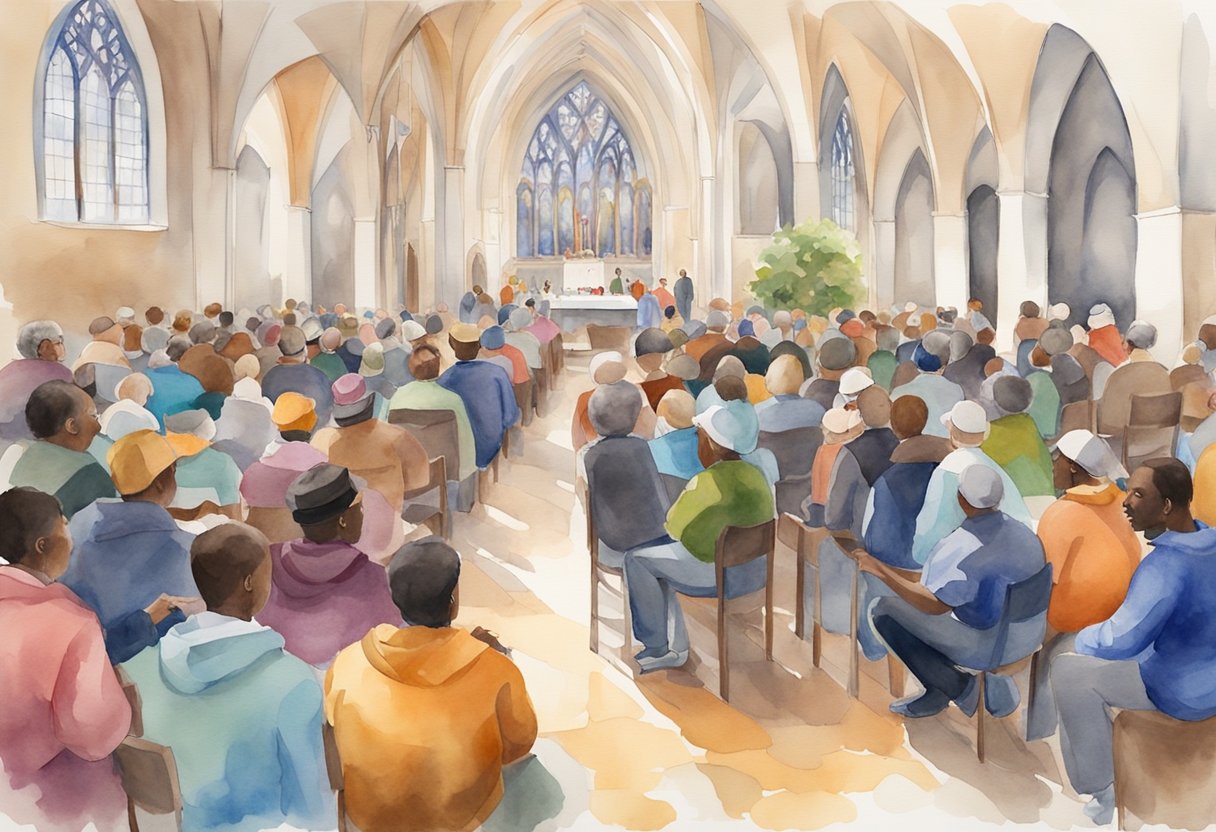
Imagine a church as a lighthouse—its beacon cutting through the fog of everyday life, guiding weary souls toward hope. But a lighthouse alone cannot illuminate the entire coastline. It needs a network of mirrors, each reflecting its light in a different direction, amplifying its reach. Similarly, a church’s outreach campaign cannot thrive on the efforts of its leaders alone. The congregation must become the mirrors, each member reflecting the church’s mission outward, transforming passive attendees into active ambassadors of faith. Involving the congregation in outreach isn’t just a strategy; it’s a cultural metamorphosis, where every believer becomes a conduit of divine light.
The Power of Collective Momentum: Why Congregational Involvement Matters
An outreach campaign is not a solo performance—it’s a symphony. When the congregation participates, the volume of impact crescendos. Studies show that churches with engaged members see a 40% higher retention rate in new visitors, not because of slick marketing, but because people are drawn to authenticity. When members share their faith stories, invite neighbors, or serve in outreach events, they lend credibility that no pulpit alone can achieve. Think of it as a ripple effect: one person’s testimony creates a wave that touches lives far beyond the church’s walls. The key lies in shifting the narrative from “the church is doing outreach” to “we are the church, and outreach is what we do.”
From Spectators to Storytellers: Empowering Members to Share Their Faith
Many congregants hesitate to share their faith not out of disinterest, but because they feel ill-equipped. The solution? Equip them—not with theological treatises, but with personal narratives. Host storytelling workshops where members practice sharing their “God moments” in 60 seconds or less. Use prompts like, “When did you first feel God’s presence in a tangible way?” or “How has your faith changed your life?” These stories, raw and unfiltered, resonate more deeply than polished sermons. Additionally, create a “testimony bank”—a digital or physical repository of these stories, categorized by themes (hope, healing, transformation) so they can be shared in small groups, social media, or even local media outlets. When members realize their stories are valuable, they become evangelists by default.
The Ripple Effect: Leveraging Social Media as a Congregational Amplifier
Social media is not just a tool—it’s a modern-day agora, a bustling marketplace of ideas where faith can flourish or fade. Yet, many churches treat it as an afterthought. Instead, harness its power by turning congregants into digital missionaries. Launch a “Share the Light” campaign where members post a Bible verse, a prayer request, or a photo of their church involvement with a branded hashtag (e.g., #OurLightHere). Provide pre-written captions or graphics to lower the barrier to participation. For example, a simple post like, “This Sunday, I felt God’s peace in the middle of chaos. Where have you seen His presence lately?” invites interaction and spreads warmth. The goal isn’t to go viral, but to create a digital tapestry of faith that others can’t ignore.
Service with a Side of Story: Turning Outreach into a Community Lovefest
Outreach isn’t just about handing out flyers or hosting events—it’s about creating experiences where people feel seen, heard, and valued. Shift the focus from “getting people to come to church” to “meeting people where they are.” Organize service projects that align with local needs: a free car wash for single parents, a community garden tended by volunteers, or a “blessing bag” distribution for the homeless. But here’s the twist: pair every act of service with a story. Before the event, share a short video or testimonial about why the project matters. Afterward, debrief with the team—what did they observe? How did people respond? This transforms outreach from a transactional activity into a transformational one, where both the giver and receiver are changed.
Consider the metaphor of a garden. A lone gardener can tend a few plants, but a community of gardeners can cultivate an entire forest. Similarly, a church’s outreach efforts may sprout in small patches, but when the congregation joins in, the landscape of the community begins to bloom. The key is to make service feel less like a duty and more like a privilege—a chance to embody Christ’s love in tangible ways.
Breaking the Ice: Creative Ways to Invite Others Without Awkwardness
Inviting someone to church or a faith-based event often feels like asking a stranger to dance—what if they say no? What if it’s awkward? The solution lies in reframing the invitation as an invitation to connection, not conversion. Host “Third Place” gatherings—casual meetups at coffee shops, parks, or community centers where members can bring friends in a low-pressure setting. Frame it as, “We’re just getting together to chat—no agenda, no pressure.” This disarms skepticism and opens doors for organic spiritual conversations. Another tactic? Use “bridge events” that appeal to shared interests. A movie night, a book club, or a sports watch party can serve as a Trojan horse for deeper discussions. The goal isn’t to ambush people with the gospel, but to create spaces where faith can organically emerge.
Measuring What Matters: Tracking Engagement Beyond Attendance Numbers
Traditional metrics like Sunday attendance or event turnout only scratch the surface. To truly gauge the health of your outreach, look deeper. Track relational metrics: How many new connections did members make? How many people attended a service after a personal invitation? How many volunteers stepped up for the first time? Use surveys or informal check-ins to ask, “Did you feel welcomed? Did you experience God’s presence?” These qualitative insights reveal the heartbeat of your outreach. Additionally, celebrate small wins—like a member who invited a coworker for the first time or a family who started attending after seeing a post. Recognition fuels motivation, turning sporadic participants into consistent advocates.
The Long Game: Cultivating a Culture of Outreach, Not Just Campaigns
Outreach campaigns are like fireworks—dazzling for a moment, but fleeting. A culture of outreach, however, is like the stars: constant, reliable, and always present. The shift begins with leadership modeling the behavior. When pastors and staff regularly invite others, share their own faith journeys, and serve in the community, the congregation follows suit. Embed outreach into the church’s DNA by integrating it into discipleship pathways. For example, pair new believers with mentors who model outreach. Or include outreach opportunities in small group discussions. Over time, outreach stops feeling like an add-on and becomes second nature—a rhythm of life, not a one-time event.
Picture a river carving a path through stone. At first, the flow is weak, barely making a dent. But over time, with persistence and collective effort, the river reshapes the landscape. Similarly, a church’s outreach efforts may start small, but as the congregation embraces its role as light-bearers, the impact becomes indelible. The goal isn’t to orchestrate a single campaign, but to ignite a movement—one where every member, from the youngest to the oldest, plays a part in spreading hope, healing, and transformation.

