

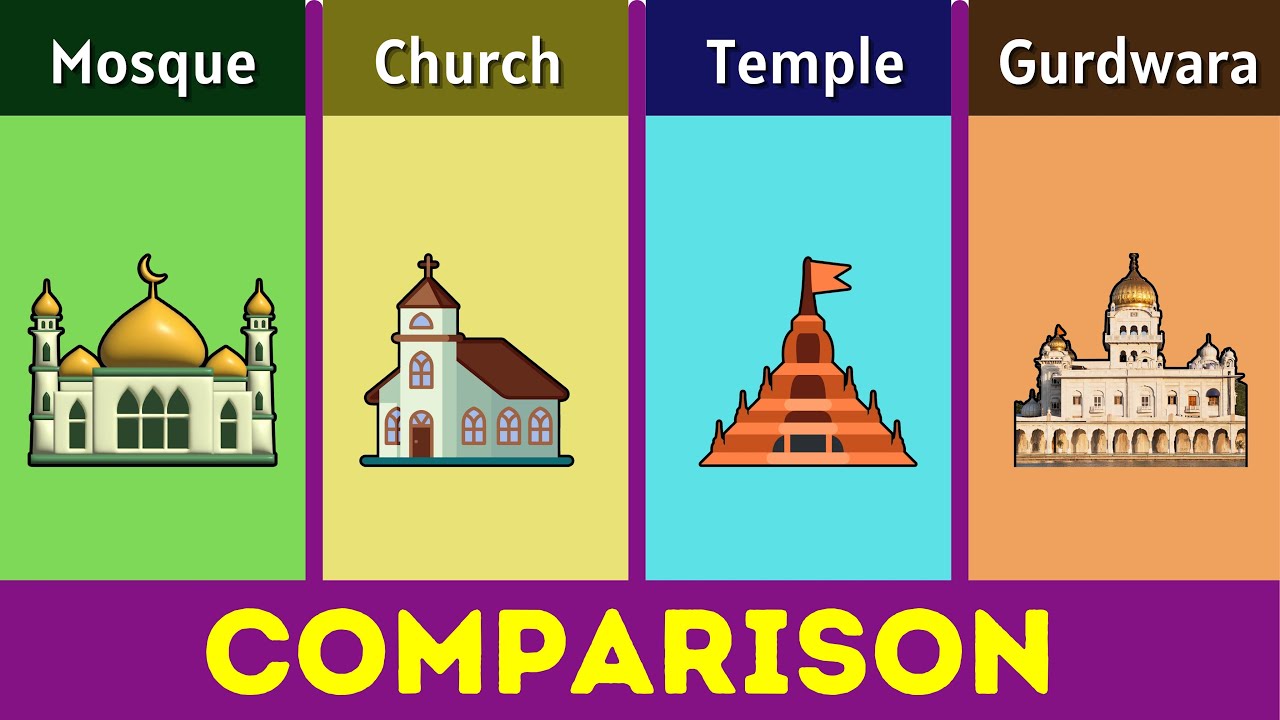
In the grand tapestry of human spirituality, few threads are as vibrant and enduring as those woven by the Church and the Temple. These sacred spaces are not merely architectural marvels; they are living embodiments of faith, culture, and history. Whether you stand beneath the soaring vaults of a Gothic cathedral or the intricately carved pillars of a Hindu mandir, you are enveloped in a world where the divine and the human converge. But what truly sets these spiritual sanctuaries apart? Beyond their physical grandeur, the Church and the Temple represent distinct theological philosophies, ritualistic practices, and communal identities. This exploration will peel back the layers of tradition, symbolism, and purpose that distinguish them, offering readers a deeper appreciation for the spiritual landscapes they inhabit.
Theological Foundations: Where Faith Takes Root
The Church and the Temple are rooted in fundamentally different theological frameworks, each shaping the way believers perceive the divine. The Church, particularly in its Christian context, is built upon the bedrock of Christology—the belief in Jesus Christ as the incarnate Son of God and the savior of humanity. This central tenet infuses every aspect of Christian worship, from the Eucharist, which commemorates Christ’s sacrifice, to the liturgical calendar that marks the life of Jesus. The Temple, on the other hand, is a cornerstone of Abrahamic traditions, most prominently Judaism and Hinduism. In Judaism, the Temple in Jerusalem was the epicenter of sacrificial worship and divine presence, a concept that persists in the synagogue’s role as a house of prayer and study. Hinduism’s temples, meanwhile, are dedicated to myriad deities, each representing facets of the divine Brahman, and serve as cosmic microcosms where the sacred and the mundane intertwine. These theological distinctions are not merely academic; they shape the very essence of how adherents engage with the sacred.
Architectural Splendor: A Feast for the Senses
The visual and sensory experiences of entering a Church or a Temple are as diverse as the traditions they represent. A Gothic cathedral, with its pointed arches, ribbed vaults, and towering spires, is designed to evoke a sense of awe and transcendence. The play of light through stained glass windows tells biblical stories in a kaleidoscope of colors, while the labyrinthine layout often leads the faithful on a spiritual journey toward the altar. In contrast, a Hindu temple is a symphony of geometric precision and symbolic ornamentation. The shikhara, or tower, rises like a mountain toward the heavens, while the inner sanctum, or garbhagriha, houses the deity in a space so dark it feels like the womb of the universe. Temples in Southeast Asia, such as those in Angkor Wat or Borobudur, are sprawling complexes where every stone is imbued with mythological significance. The Church’s architecture whispers of heaven’s grandeur, while the Temple’s design is a coded language of cosmic order.
Rituals and Worship: The Dance of Devotion
Worship in a Church and a Temple is a choreography of faith, where every movement, word, and gesture carries profound meaning. Christian liturgy is a structured affair, often led by clergy in robes that signify their sacred role. The Mass, for instance, follows a prescribed order—from the penitential rites to the consecration of the Eucharist—each step designed to draw the congregation into a communal experience of grace. The sacraments, such as baptism and confession, are not just rituals but transformative encounters with the divine. In a Temple, worship is a more decentralized affair, with devotees often approaching the deity directly through puja (worship rituals) that vary by tradition. The ringing of bells, the offering of flowers and incense, and the anointing of the deity’s idol are acts of devotion that bind the individual to the divine. While the Church’s worship is often congregational and hierarchical, Temple rituals can be deeply personal, with each devotee crafting their own path to the sacred.
Sacred Texts and Teachings: The Living Word
The spiritual nourishment derived from a Church or a Temple is deeply tied to the sacred texts that underpin their traditions. For Christians, the Bible is the cornerstone—a compilation of scriptures that narrate the story of salvation from Genesis to Revelation. Sermons, Bible studies, and homilies are vehicles for interpreting these texts, often blending theological scholarship with practical wisdom. Temples, meanwhile, are repositories of diverse scriptures. In Hinduism, the Vedas, Upanishads, and Bhagavad Gita serve as philosophical and devotional guides, while in Judaism, the Torah and Talmud are the bedrock of Jewish law and ethics. The way these texts are studied and revered differs markedly: in a Church, they are often read aloud in a communal setting, while in a Temple, they may be chanted, meditated upon, or even inscribed on temple walls. The sacred text is not just a book; it is a living force that shapes the believer’s worldview.
Community and Belonging: The Heart of the Sacred
Both the Church and the Temple are more than physical spaces; they are the beating hearts of their respective communities. The Church fosters a sense of belonging through its congregational worship, charitable outreach, and shared rituals. It is a place where families gather for baptisms, weddings, and funerals, where the rites of passage are marked with communal support. Temples, too, are hubs of social cohesion, but their role extends beyond the religious. In many cultures, temples are centers of learning, art, and even economic activity. Hindu temples, for example, have historically been patrons of classical dance, music, and sculpture, while Jewish synagogues have served as schools and meeting places for centuries. The sense of community in a Temple is often intertwined with cultural identity, whereas in a Church, it is frequently tied to a shared faith in Christ. Both, however, provide a sanctuary—a place where individuals find solace, purpose, and connection.
Symbolism and Iconography: The Language of the Divine
The visual language of a Church and a Temple is a testament to their unique spiritual vocabularies. In a Church, symbolism is often abstract yet potent. The cross, the lamb, the fish, and the dove are recurring motifs that point to Christ’s sacrifice, redemption, and the Holy Spirit. Stained glass windows depict scenes from the Bible, while statues of saints and angels serve as intercessors and guides. The Temple, by contrast, is a canvas of concrete symbolism. The lotus flower, representing purity, the conch shell, symbolizing the primordial sound of creation, and the omkar, the sacred syllable, are woven into every aspect of temple design. Hindu temples are adorned with murals and sculptures that narrate the lives of gods and goddesses, while Jewish synagogues feature the Star of David and the menorah, symbols of divine protection and enlightenment. These symbols are not mere decorations; they are gateways to deeper spiritual understanding.
Modern Relevance: Adapting to a Changing World
In an era of globalization and secularization, the Church and the Temple face both challenges and opportunities. The Church has had to navigate the complexities of modernity, from the rise of atheism to the digital revolution that has transformed how people engage with faith. Many churches now livestream services, offer online Bible studies, and use social media to connect with younger generations. Temples, too, are adapting. Hindu temples in the West, for instance, often blend traditional rituals with contemporary practices, such as meditation workshops or interfaith dialogues. Jewish synagogues have embraced eco-friendly initiatives, reflecting a growing awareness of environmental stewardship. Despite these changes, the core purpose of both institutions remains unchanged: to provide a space for spiritual nourishment, moral guidance, and communal support. In a world that often feels fragmented, the Church and the Temple stand as beacons of continuity and meaning.
The Church and the Temple are not just relics of the past; they are dynamic, evolving entities that continue to shape the spiritual landscape of humanity. Whether you find yourself kneeling in the quiet of a cathedral or standing in the vibrant chaos of a temple courtyard, you are participating in a tradition that spans millennia. These sacred spaces are more than buildings—they are living testaments to humanity’s eternal quest for the divine. By understanding their distinctions, we not only honor their unique legacies but also enrich our own spiritual journeys.

